- Study Abroad
- / ielts
- / european heat wave reading answers
European Heat wave Reading Answers


Author
16-09-2025

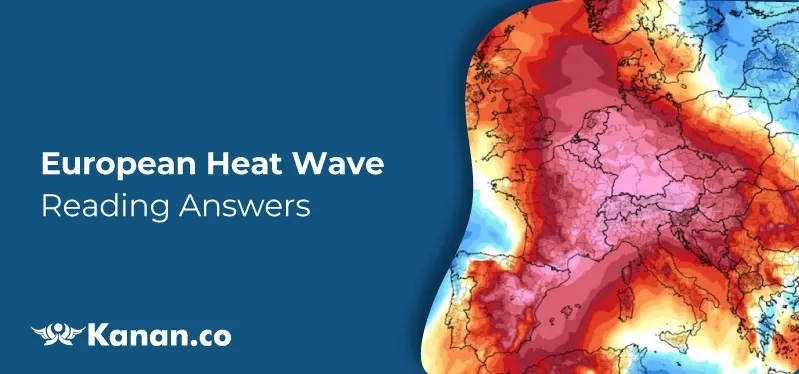
With explanations, we have offered European Heat wave reading answers. In European Heat wave Reading Answers, there are ten paragraphs. Four different question types: True/False/Not Given, Short Answer, Summary Completion, and Multiple Choice Questions (MCQs).
Table of contents:
- Solution for European Heatwave
- European Heatwave IELTS Reading Practice Test
- Passage
- Questions
- Answers with Explanations
Solution for European Heatwave
We have provided European Heat wave reading answers in the table below for your convenience.
Answer Table
| 1. True | 5. True | 9. France | 13. 500 |
| 2. False |
6. Not Given |
10. 1856 | 14. D |
| 3. True | 7. 1976 and 1995 | 11. 1988 and 2002 | |
| 4. Not Given | 8. 2000 floods | 12. 1990 |

European Heatwave IELTS Reading Practice Test - Exam Review
Check out our YouTube Channel to Practice Full-Length IELTS Reading Tests Daily

Here are the European Heat wave Reading Answers to help you improve your time-management and problem-solving abilities, which are important for reading tasks.
Passage
You should spend 20 minutes reading European Heat wave reading passage and answering (1–14) questions. Also, we have provided European Heat wave reading answers with locations for the reference.
European Heat Wave
It was the summer, scientists now realise, when felt. We knew that summer 2003 was remarkable: global warming, at last, made itself unmistakably Britain experienced its record high temperature and continental Europe saw forest fires raging out of control, great rivers drying of a trickle and thousands of heat-related deaths. But just how remarkable is only now becoming clear.
The three months of June, July and August were the warmest ever recorded in western and central Europe, with record national highs in Portugal, Germany, and Switzerland as well as Britain. And they were the warmest by a very long way Over a great rectangular block of the earth stretching from west of Paris to northern Italy, taking in Switzerland and southern Germany, the average temperature for the summer months was 3.78°C above the long-term norm, said the Climatic Research Unit (CRU) of the University of East Anglia in Norwich, which is one of the world’s leading institutions for the monitoring and analysis of temperature records.
That excess might not seem a lot until you are aware of the context – but then you realise it is enormous. There is nothing like this in previous data, anywhere. It is considered so exceptional that Professor Phil Jones, the CRU’s director, is prepared to say openly – in a way few scientists have done before – that the 2003 extreme may be directly attributed, not to natural climate variability, but to global warming caused by human actions.
Meteorologists have hitherto contented themselves with the formula that recent high temperatures are consistent with predictions” of climate change. For the great block of the map - that stretching between 3 5-5 ON and 0-20E – the CRU has reliable temperature records dating back to 1781. Using as a baseline the average summer temperature recorded between 1961 and1990, departures from the temperature norm, or “anomalies’: over the area as a whole can easily be plotted. As the graph shows, such as the variability of our climate over the past 200 years, there have been at least half a dozen anomalies, in terms of excess temperature – the peaks on the graph denoting very hot years – approaching, or even exceeding, 20 °C. But there has been nothing remotely like 2003 when the anomaly is nearly four degrees.
“This is quite remarkable,” Professor Jones told The Independent. “It’s very unusual in a statistical sense. If this series had a normal statistical distribution, you wouldn’t get this number. Their turn period “how often it could be expected to recur” would be something like one in a thousand years. If we look at an excess above the average of nearly four degrees, then perhaps nearly three degrees of that is natural variability, because we’ve seen that in past summers. But the final degree of it is likely to be due to global warming, caused by human actions.
The summer of 2003 has, in a sense, been one that climate scientists have long been expecting. Until now, the warming has been manifesting itself mainly in winters that have been less cold than in summers that have been much hotter. Last week, the United Nations predicted that winters were warming so quickly that winter sports would die out in Europe’s lower-level ski resorts. But sooner or later the unprecedented hot summer was bound to come, and this year it did.
One of the most dramatic features of the summer was the hot nights, especially in the first half of August. In Paris, the temperature never dropped below 230°C (73.40°F) at all between 7 and 14 August, and the city recorded its warmest-ever night on 11-12 August, when the mercury did not drop below 25.50°C (77.90°F). Germany recorded its warmest-ever night at Weinbiet in the Rhine valley with the lowest figure of 27.60°C (80.60°F) on 13 August, and similar record-breaking night-time temperatures were recorded in Switzerland and Italy.
The 15,000 excess deaths in France during August, compared with previous years, have been related to the high night-time temperatures. The number gradually increased during the first 12 days of the month, peaking at about 2,000 per day on the night of 12-13 August, then fell off dramatically after 14 August when the minimum temperatures fell by about 50C. The elderly were most affected, with a 70 percent increase in the mortality rate in those aged 75-94.
For Britain, the year as a whole is likely to be the warmest ever recorded, but despite the high-temperature record on 10 August, the summer itself – defined as the June, July, and August period – still comes behind 1976 and 1995,when there were long periods of intense heat. At the moment, the year is on course to be the third-hottest ever in the global temperature record, which goes back to 1856, behind 1998 and 2002 but when all the records for October, November, and December are collated, it might move into second place, Professor Jones said. The 10 hottest years in the record have all now occurred since 1990. Professor Jones is in no doubt about the astonishing nature of the European summer of 2003.”The temperatures recorded were out of all proportion to the previous record,” he said. “It was the warmest summer in the past 500 years and probably way beyond that. It was enormously exceptional.”
His colleagues at the University of East Anglia’s Tyndall Centre for Climate Change Research are now planning a special study of it. “It was a summer that has not: been experienced before, either in terms of the temperature extremes that were reached, or the range and diversity of the impacts of the extreme heat,” said the centre’s executive director, Professor Mike Hulme. “It will certainly have left its mark on a number of countries, as to how they think and plan for climate change in the future, much as the 2000 floods have revolutionised the way the Government is thinking about flooding in the UK. “The 2003 heatwave will have similar repercussions across Europe.”
Questions
Questions 1-6
Do the following statements agree with the information given in the Reading Passage?
In boxes 1-6 on your answer sheet, write-
- TRUE if the statement agrees with the information
- FALSE if the statement contradicts the information
- NOT GIVEN If there is no information on this
(Guide: Candidates need to select the correct answer - True or False or Not Given for the given statements)
- solution-for-european-heatwaveThe average summer temperature in 2003 is approximately four degrees higher than that of the past.
- Jones believes the temperature statistic is within the normal range.
- Human factors are one of the reasons that cause hot summers.
- In large cities, people usually measure temperature twice a day.
- Global warming has the obvious effect of warmer winter instead of hotter summer before 2003.
- New ski resorts are to be built on a high-altitude spot.
Questions 7 and 8
Answer the questions below.
Use NO MORE THAN THREE WORDS AND/OR NUMBERS from the passage for each answer.
Write your answers in boxes 7 and 8 on your answer sheet.
7. What are the two hottest years in Britain besides 2003?
8. What will affect UK government policies besides climate change according to Hulme?
Questions 9-13
Complete the summary below.
Use NO MORE THAN TWO WORDS from the passage.
Write your answers in boxes 7-11 On your answer sheet.
In the summer of 2003, thousands of extra deaths occurred in the country of 9. ______________. Moreover, world-wide, the third record of hottest summer dates from 10. _____________, after the year of 11. _____________. According to Jones, all the 10 hottest years happened from 12. ______________ . However, summer of 2003 was at the peak of the previous 13. ______________ years, perhaps even more.
Questions 14
Choose the correct letter A, B, C or D.
Write your answer in box 14 on your answer sheet.
14. Which one can be best served as the title of this passage in the following options?
A. Global Warming effect.
B. Global Warming in Europe.
C. The Effects of Hot temperature.
D. Hottest summer in Europe.
Answers for European Heat wave With Explanations
European Heat wave reading answers with justification are given below. It will be useful for rectifying the mistakes in your answering process.
(Note: The language highlighted in bold refers to the passage's location and answer. The explanatory sentences from the reading passage are shown in italics.)
1. Answer: True
Explanation: It is clearly illustrated in Paragraph 4, Last Lines that, as the graph shows, the variability in climate has been at least half a dozen anomalies, in terms of excess temperature (the peaks on the graph denoting very hot years) approaching, or even exceeding, 20 °C. But there has been nothing remotely like 2003, when the anomaly was nearly four degrees. Therefore, the statement, the average summer temperature in 2003 was approximately four degrees higher than that of the past is accurate.
2. Answer: False
Explanation: In Paragraph 5, Professor Jones told the Independent that he was quite surprised by the statistical sense. Moreover, he added that if this series had a normal statistical distribution, you wouldn’t get this number. Their turn period, “how often it could be expected to recur” would be something like one in a thousand years. Jone’s assertion that the temperature statistic is within the normal range is therefore false because he was shocked to learn that the number was outside of the range.
3. Answer: True
Explanation: It is apparent from Paragraph 5, Last Lines, that if we look at an excess above the average of nearly four degrees, then perhaps nearly three degrees of that is natural variability because we’ve seen that in past summers. But the final degree of it is likely to be due to global warming, caused by human actions. Thus, the claim that human factors are one of the reasons that cause hot summers is accurate.
4. Answer: Not Given
Explanation: There is no context for the following sentence and it is not included in the text.
5. Answer: True
Explanation: It can be seen from Paragraph 6, Introductory Lines, that the summer of 2003 has, in a sense, been one that climate scientists have long been expecting. Until now, the warming has manifested itself mainly in winters that have been less cold than in summers that have been much hotter. This suggests that global warming has had the obvious effect of warmer winters instead of hotter summers before 2003. On this account, the answer is true.
6. Answer: Not Given
Explanation: There is no context for the following sentence and it is not included in the text.
7. Answer: 1976 and 1995
Explanation: In Paragraph 9, Line 1, it is discussed that for Britain, the year as a whole is likely to be the warmest ever recorded, but despite the high temperature record on August 10, the summer itself – defined as the June, July, and August period – still comes behind 1976 and 1995, when there were long periods of intense heat. This implies that, besides 2003, 1976 and 1995 are the two hottest years.
8. Answer: 2000 floods
Explanation: It is mentioned in Paragraph 9, Last Lines, that it will certainly have left its mark on a number of countries, as to how they think and plan for climate change in the future, much as the 2000 floods revolutionised the way the government is thinking about flooding in the UK. So, according to Hulme, 2000 floods will affect UK government policies besides climate change.
9. Answer: France
Explanation: In the Initial lines of Paragraph 8, it is clearly stated that the 15,000 excess deaths in France during August, compared with previous years, have been related to the high night-time temperatures. This indicates that in the summer of 2003, thousands of extra deaths occurred in France.
10. Answer: 1856
Explanation: In Paragraph 9, Line 4 reveals the information that at the moment, the year is on course to be the third-hottest ever in the global temperature record, which goes back to 1856, behind 1998 and 2002, but when all the records for October, November, and December are collated, it might move into second place, Professor Jones said. Here, the three hottest years in the global temperature record are 1856,1998, and 2002.
11. Answer: 1998 and 2002
Explanation: In Paragraph 9, Line 4, it is said that at the moment, the year is on course to be the third-hottest ever in the global temperature record, which goes back to 1856, behind 1998 and 2002, but when all the records for October, November, and December are collated, it might move into second place, Professor Jones said. So, the three hottest years in the global temperature record are 1856, followed by 1998 and 2002.
12. Answer: 1990
Explanation: In Paragraph 9, Last Fifth Line, it is pointed out that the 10 hottest years in the record have all now occurred since 1990. Professor Jones is in no doubt about the astonishing nature of the European summer of 2003. Therefore, according to Jones, all 10 of the hottest years happened from 1990.
13. Answer: 500
Explanation: In Paragraph 9, Last Lines it is narrated that the temperatures recorded were out of all proportion to the previous record,” he said. “It was the warmest summer in the past 500 years and probably way beyond that. It was enormously exceptional.” This signifies that summer of 2003 was at the peak of the previous 500 years, perhaps even more.
14. Answer: D
Explanation: The entire passage makes it quite obvious that it has just discussed the warmest summer in Europe. Therefore, D is the appropriate answer.
Other Reading Tests

About Author Roshan Sunthar
Roshan Sunthar is a study abroad expert as well as a renowned writer and author in international education. His academic excellence and 5+ years of work experience give him in-depth knowledge of international standardised exams and test preparation in IELTS, TOEFL, GRE, PTE, SAT, etc. The study materials he prepares incorporate exam-like questions. He’s also an expert in writing Statement of Purposes (SOPs) and Letter of Recommendations (LORs) for college admissions. He usually spends his leisure time watching English classics and documentaries, travelling, etc.
Kanan.co is a trusted study abroad consultancy offering comprehensive services, resources, and solutions for students and education institutions. We support students at every stage of their global education journey, ensuring a smooth and guided experience. Along with test preparation for IELTS, GRE, TOEFL, and SAT, we provide expert services such as SOP writing, visa guidance, accommodation support, scholarship assistance, and education loan support. Our expertise and commitment to excellence make us a reliable partner for students pursuing international education.
Free Online Mock Test 2026
Practice our mock test worth Rs. 25000 for Free and know your IELTS score!








Global Headquarters
Kanan Int EdTech Inc
320 Bay Street, Suite 321 (Spaces), Toronto ON, Canada M5B 1N9
Indian Headquarters
Kanan International Pvt. Ltd.
D-wing, 2nd Floor, Trident Complex, Ellora Park Vadiwadi Road, Vadodara, Gujarat 390007
IT/ Digital Campus
Kanan International Pvt. Ltd
Old, New No 3, 2nd Floor, 1A, Dr Sadasivam Rd, T. Nagar, Chennai, Tamil Nadu 600017
Our branches
- Bardoli
- Bharuch
- Chennai
- Dehradun
- Gurugram
- Himatnagar
- Karnal
- Nadiad
- Navsari
- Palanpur
- Rajkot
- Vadodara
- Valsad
- Vallabh Vidyanagar
- Vapi
Study Abroad
Test Prep
Top Universities
Consultants
IELTS Centers
GRE Centers
TOEFL Centers
SAT Centers
Language Courses in Vadodara
Study Abroad Calculators
Featured Blogs
Study Abroad Consultants in Chennai
Study Abroad Consultants in Surat
Study Abroad Consultants in Navsari
Study Abroad Consultants in Bardoli
Study Abroad Consultants in Ahmedabad
Study Abroad Consultants in Anand
Study Abroad Consultants in Khanna
Study Abroad Consultants in Nadiad
Study Abroad Consultants in Vadodara
Study abroad consultants in Valsad
Copyright © 2026 KANAN.CO All rights reserved.