Study in UK
Create your path to excellence!
Discover all about UK education with end-to-end expert guidance, and make your study abroad dream a reality

Discover What’s Inside
Study in UK
Studying in UK is a world-renowned opportunity that attracts thousands of international students annually from countries like India, EU nations, and beyond. The UK offers a diverse range of programs, from English language courses to PhDs, across fields such as engineering, science, art and design, business, management, law, and finance.
Known for its strong academic experience and research legacy, the UK is home to some of the world's top universities, making it a hub for innovation and intellectual growth. The variety of courses available allows students to explore different areas of study, meeting a wide range of academic and professional interests.
For those looking to study in UK, the country’s education system is renowned for its combination of tradition and modernity. Renowned for its research-driven programs in engineering and science, the country also excels in fostering creativity in art and design.
Its business, management, and finance courses prepare students for leadership roles, while its law schools are recognized globally for their excellence. If you're a serious candidate, read this entire blog to know the popular universities & courses, visa requirements, education costs, scholarships, intakes, etc., to study in the UK.
Why Study in UK?
Studying in the UK appeals due to its globally recognised universities, advanced research opportunities, international exposure, and rich cultural experiences, making it a top choice for higher education. For international students, choosing to study in the UK is a smart move. The UK is known for great education and a rich history of learning.
The country is adorned with captivating cities like Edinburgh, Manchester, Birmingham, and Glasgow. Moreover, UK universities are some of the best globally ranked, like the University of Oxford, University of Cambridge, Imperial College London, and University College London.
Study in UK: Key Facts & Statistics

Languages spoken
English, Welsh, Gaelic, Cornish, and Ulster Scots

Top UK cities to study
London, Edinburgh, Manchester, Birmingham, Glasgow, Coventry, and New Castle, Leicester, Northampton, Liverpool, Leeds

Intakes
September Intake/Fall Intake, January Intake/Winter Intake, May Intake/Spring Intake

Levels of Degrees
Bachelor's Degree, Master's Degree, Master of Research (MRes), Doctor of Philosophy (PhD)

Exams required
IELTS / IELTS UKVI, PTE Academic / PTE UKVI, TOEFL iBT, Duolingo, Cambridge English Qualifications and OET (for healthcare-related programs) or ISE

Visa type
Tier 4 (General) Student Visas
Study visa costs
£598 (approx. INR 67,500)

Cost of study
Around £17,109 (approx. INR 18,12,285) per year

Financial aid
Scholarships, Grants, Student Loans, Work-Study Programs, Funds, and Bursaries for International Students
From the following table, it is clear that you need to have good academic records, prove English language proficiency skills, apply for Tier 4 (General) Student Visas and pay £598 (approx. INR 67,500) as visa cost to study in UK.
Among various English-speaking countries, the UK is a welcoming, safe, and friendly destination for foreign students. It offers a helping environment for learning and personal growth. Indian students choose the UK as their preferred study destination due to the high-quality education and globally recognised degrees offered by its universities.
UK colleges and universities are known for providing excellent academic standards, innovative teaching methodologies, and a strong emphasis on research. The UK presents diverse programs, from Business Management, Engineering, and Computer Science to Arts, Medicine, and Environmental Studies, enabling students to align their choices with their goals.
Let’s Hear From Our Students
Our students send us bunch of smilies with our services and we love them
Top 10 Benefits of Studying in UK
The UK is famed for its quality education system and ample options for higher studies and employability. With 100+ government-funded and private universities, international students have various study options, including short diplomas, certificates, bachelor's and master's degrees, and specialised courses.
Some of the unique benefits of studying in the UK are that UK offers tailor-made courses, with shorter course lengths, viz. 1-year master’s programs. These programs are fast-paced, offer profound insights of the respective fields and prepare the candidates for UK job market, at the earliest.
The benefits of studying in UK are:
- Affordability and easier visa process:
- Post-Study Work Opportunities:
- Language Skill Enhancement:
- Scholarships for Indian Students:
- Research Opportunities:
- Top-Ranked Universities:
- UK Government Scholarships:
- Vast Alumni Network:
- Personal Growth and Adaptability:
- Renowned Education System:
The UK has the Student Direct Stream (SDS) to simplify the visa application process and offers various affordable study options.
The new Graduate Route permits international students to work in the UK for up to two years after graduation, enhancing career prospects.
Studying in an English-speaking country like the UK improves language proficiency, providing a competitive edge in the global job market.
Indian students have access to scholarships such as Chevening and GREAT Scholarships, supporting their education in the UK.
The UKs research-intensive universities enable Indian students to engage in advanced research across various fields.
Leading institutions like Oxford, Cambridge, Imperial College London, and UCL offer quality education. They are ranked among the top 10 QS World University Rankings 2026.
Over 80 scholarships and financial aid are available for international students, promoting educational collaboration and cultural exchange.
The UK's extensive alumni network offers valuable connections and networking prospects for Indian students throughout their careers.
Living in the UK exposes students to diverse cultures, encouraging personal growth, freedom, and adaptability.
The UKs education system is globally recognised for its quality, ensuring a solid foundation for future success.


Popular Courses to Study in UK
Top-tier universities in the UK take a hands-on learning approach in their pedagogical system. It means students learn by doing real-world tasks. Students pick their favourite courses from Business, Engineering, Computer Science, Medicine, Data Science, Artificial Intelligence, Cybersecurity, Social Sciences, and Arts through three main types of degrees: Bachelor's, Master's, and Doctoral research programs.
The list of popular courses to study in the UK is given below based on global needs:
The popular courses to study in UK are:
The list of top courses in the UK for international students with average annual tuition fees are given in the table below.
| Programs | Duration | Average Tuition Fees |
|---|---|---|
| Business Management and Entrepreneurship | 1 - 2 years | BA- £13,000 (INR 12,49,618.87) MSc- £78,000 (INR 74,76,335.15) |
| Medicine | 5 - 6 years | £22,000 - £52,000 (INR 22,84,657 - INR 54,00,099) |
| Law | 3 - 4 years | £19,500 to £44,000 (INR 20,25,037 - INR 46,21,333) |
| Social Sciences | 3 - 4 years | £12,000 - £45,000 (INR 12,46,202 - INR 46,73,259) |
| Media and communication | 2 - 3 years | £15,000 - £32,000 (INR 15,57,753 - INR 33,23,488) |
| Data Science and Analytics | 1 - 2 years | £19,000 - £40,000 (approx. INR 19,73,151 - INR 41,54,004) |
| Artificial Intelligence and Machine Learning | 1 - 2 years | £14,010 - £48,500 (INR 14,54,939 - INR 50,38,109) |
| Cybersecurity and Information Security | 1 - 2 years | £24,000 and £32,000 (INR 24,93,084 - INR 33,23,488) |
| Nursing and Healthcare Management | 2 - 4 years | £15,000 - £30,000 (1,379,100 INR to 2,758,200 INR) |
| Biomedical Science and Bioinformatics | 2 - 3 years | £15240 - £24,000 (INR 15,83,108 - INR 24,93,084) |
| Public Health and Epidemiology | 1 - 2 years | £17,200 - £37,800 (INR 17,86,710 - INR 39,26,645) |
| Digital Marketing and Communications | 1 - 2 years | £18,123 (23,13,194 INR) |
| Finance and Accounting | 2 - 3 years | UG - £9,250 (89,1883.46 INR) PG - £32,151.06 (31,00,000 INR) |
| Architecture and Urban Planning | 3 - 5 years | £20,000 - £50,000 (INR 20,77,590 - INR 51,94,555) |
Top Universities to Study in UK
Prospective students will experience academic excellence at the top-notch universities in the UK . These prestigious institutions are perfect for students who want to study abroad.
Aspirants can engage themselves in a rich academic history, learn from experienced professors, guest faculties, and field experts, and work together with working professionals from around the world.
It doesn't matter if they’re into arts, science, technology, or business, UK universities offer an education that will change their future.
The table below represents the leading universities in the UK, along with their respective QS World University Rankings 2026 and Times Higher Education (THE) Rankings 2026:
The top universities to study in UK are:
| UK Ranking | University Name | University’s Highlights | QS World Ranking 2026 | Times Higher Education | Location |
|---|---|---|---|---|---|
| #01 |  Imperial College London Imperial College London | Focus on science, engineering, and medicine | 2 | 8 | London, UK |
| #02 |  University of Oxford University of Oxford | A leading institution with a rich scholarly tradition | 4 | 1 | Oxford, UK |
| #03 |  University of Cambridge University of Cambridge | Renowned for academic excellence and historic legacy | 6 | 3 | Cambridge, UK |
| #04 |  University College London University College London | Focus on science, engineering, and medicine | 9 | 22 | London, UK |
| #05 |  Kings College London Kings College London | Known for health sciences and humanities | 31 | 38 | London, UK |
| #06 |  University of Edinburgh University of Edinburgh | A broad range of programs and strong research | 34 | 29 | Edinburgh, UK |
| #07 |  University of Bristol University of Bristol | Research-oriented with a strong student community | 35 | 80 | Bristol, UK |
| #08 |  London School of Economics and Political London School of Economics and Political | Specialises in social sciences and economics | 51 | 32 | London, UK |
| #07 | University of Bristol | Research-oriented with a strong student community | 35 | 80 | Bristol, UK |
| #08 | London School of Economics and Political | Specialises in social sciences and economics | 51 | 32 | London, UK |
| #09 |  The University of Warwick The University of Warwick | A broad range of programs and strong research | 56 | 122 | Coventry, UK |
| #10 |  University of Glasgow University of Glasgow | Broad curriculum and best student life | 74 | 84 | Glasgow, UK |
Best Places to Study in UK
Knowing the best student cities in the UK is crucial for a better education journey. From dynamic cultural hubs to academic excellence, UK cities offer an all-encompassing experience.
Explore top student cities like London, Edinburgh, and Manchester, each brimming with unique opportunities. Know the individual characteristics and educational offerings to choose the best places to study in UK.
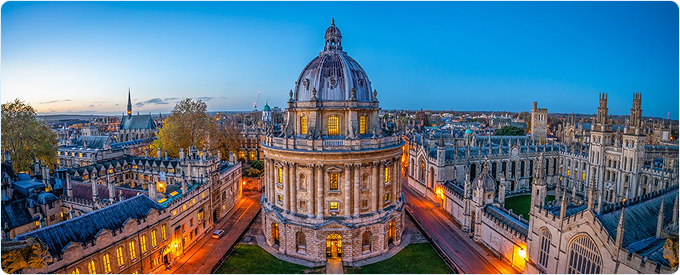
Oxford
Oxford is located in South East England, approximately 60 miles (97 km) northwest of London. Oxford has a nickname of ‘the City of Dreaming Spires’. It is known for its historical charm, picturesque architecture, and the world’s oldest universities. A UK student’s annual course fees are £9,250 for 2025-26.
Find Universities in Oxford
London
London the capital city of England and the United Kingdom, is situated in the southeastern part of England. It contains a large number of universities, including well-known institutions like Imperial College London, University College London (UCL), and the London School of Economics and Political Science (LSE). The average tuition fees fell between £9,250 (US $11,470) – £67,892 per year.
Find Universities in London
Liverpool
Liverpool is located in the northwest of England, along the eastern side of the Mersey Estuary. The city is famous for its maritime history, cultural heritage, and the iconic Liverpool Cathedral. The average Tuition Fee ranges between GBP 21,000 - GBP 40,000 per year.
Find Universities in Liverpool
Bath
Bath is situated in the southwest of England, renowned for its natural hot springs, Georgian architecture, and Bath Abbey. It hosts the University of Bath, known for engineering, architecture, and social sciences. The average tuition fee ranges between 3,120 to 37,500 GBP (3.25 to 39.12 lakhs) per annum.
Find Universities in Bath
Birmingham
Birmingham is located in the West Midlands region of England. It is a vibrant and diverse city with a rich industrial history and a thriving cultural scene. The average Tuition fee is between INR 9.8 Lakhs - 19.2 Lakhs annually.
Find Universities in Birmingham
Edinburgh
Edinburgh is the capital city of Scotland, located in the southeastern part of the country. The city has great historic and cultural landmarks including the Edinburgh Castle and the Royal Mile. The tuition fee in Edinburgh is around GBP 29,000 35 lakhs/year.
Find Universities in Edinburgh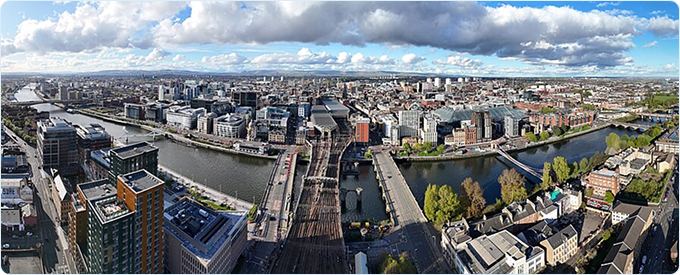
Glasgow
Glasgow is the largest city in Scotland and is situated in the western part of the country. It has multiple universities, including the University of Glasgow and the University of Strathclyde. The city is celebrated for its cultural offerings, art galleries, and music scene. The average tuition fee is between GBP 6,800 to GBP 53,460 per year.
Find Universities in Glasgow
Newcastle Upon Tyne
Newcastle Upon Tyne is located in the northeastern part of England. The city commonly known as Newcastle, with an energetic nightlife, rich history, and proximity to stunning landscapes. The average tuition fee lies between GBP 19200 - GBP 24300 per year.
Find Universities in Newcastle Upon Tyne
Wales
Wales is a country that is part of the United Kingdom, located to the west of England. The city is popular for its cultural festivals and Cardiff Castle. Cardiff University offers a wide range of academic programs. The average tuition fee ranges from £12,000 to £22,000 per year.
Find Universities in Wales
Manchester
Manchester is a major city in the northwest of England. The city has a rich industrial heritage, a great music scene, and the University of Manchester, one of the UK's largest and top institutions. The average tuition fee is typically around 12,200 GBP to 44,800 GBP per annum.
Find Universities in Manchester
Coventry
Coventry is situated in the West Midlands region of England. Coventry University and the University of Warwick are prominent universities in the city. It is notable for its history and the modern Coventry University, known for its innovative programs. The average tuition fee is generally around 20,050 GBP to 24,050 GBP (19 to 23 lakhs INR) per year.
Find Universities in CoventryHow to Study in UK?
Following these steps is essential for a smooth and successful journey towards studying in the UK. The following steps offer a simplified step-by-step guide to the students aspiring to study in UK.
Research programs
Begin by exploring diverse study programs tofind the perfect fit for your academic goals and interests.
Choose destination
Once you've decided on your program, choose an ideal destination that aligns with your aspirations and preferences.
Prepare documents
Collect needed documents: transcripts, recommendations, test scores, for your application.
Apply and wait
Submit your applications to your chosen - universities and patiently await responses, keeping an eye on deadlines and notifications.
Visa and go
After acceptance, manage visa process, prep for journey with necessary documents.
UK Student Visa Requirements
To study in UK, aspirants need the UK Student Visa, commonly known as the Tier 4 Visa to study full-time courses. If applicants seek shorter courses, a Visitor Visa might be necessary. Typically, students receive a visa decision within 3 weeks, so applying in advance is essential.
The cost for UK study visa is £598 (approx. INR 67,500) (INR 38,507 approx.) for applications from outside the UK. The UK Student Visa is a part of the Points-Based System (PBS) established by the UK government to manage immigration.
For more information about student visas or study permits, visit the UK government official website or reach out to the local British embassy/consulate.
Student Visa Requirements for UK
- Valid passport
- Confirmation of Acceptance for Studies (CAS)
- Passport-size photographs
- Academic transcripts
- Valid ATAS certificate (if applicable)
- Documentation confirming parental or legal guardian consent (for applicants under 18)
- Proof of relationship to parent/guardian (if under 18)
- Tuberculosis test results
- Written authorisation from financial sponsor (if sponsored in the last 12 months)
- Financial proof to support course fees and living expenses
- The advisable funds are £1,483 per month (London) / £1,136 per month (outside London) for up to 9 months
- For language requirements, students must get a score Equivalent to CEFR level B2 for Degree level or above, CEFR level B1 for below degree level
- Applying from outside the UK: Prove identity, fingerprints, and photograph (biometric information), Use ‘UK Immigration: ID Check’ app for identity documents or scan Create/sign into UK Visas and Immigration (UKVI) account
Intakes to Study in UK
Study intakes refer to specific periods when universities in the UK offer academic programs, allowing students to start their studies.
It's important for international students to grasp these intake cycles, as they affect application deadlines, course availability, and visa processing times. The three intakes in UK are September (Fall), January (Winter), and May Intake (Spring) (least preferred)

September/Fall Intake
Program: Undergraduate and Postgraduate
The September intake or Fall intake is the most popular and widely available. It aligns with the start of the academic year, offering a comprehensive range of courses and opportunities for internships, jobs and networking.
Apply now

January/ Winter Intake
Program: Undergraduate and Postgraduate
The January intake or Winter intake provides an alternative entry point for students who missed the September intake or want to start fresh in the new year. It might have fewer courses available compared to September, but it offers a chance to avoid the competition for popular programs.
Apply now

May/Spring Intake
Program: Diploma
The April intake, also known as the spring intake, is less common and offers a smaller selection of courses compared to the other intakes. It could be suitable for those seeking specialised programs or having specific scheduling preferences.
Apply now
What are the requirements to study in the UK?
To pursue education in the UK, aspiring international students must meet various requirements. These include academic requirements like specific grades or qualifications, English language proficiency test score requirements (such as IELTS, TOEFL, UKVI IELTS.), financial evidence to support living and tuition expenses, and obtaining a Student Visa.
Complete details about these requirements from trusted sources, guaranteeing accuracy and reliability.
Academic Qualifications
From undergraduate to postgraduate and research programs, we're here to guide you through your academic needs. Our comprehensive list of information includes details about minimum English proficiency test scores, educational qualifications, and other vital criteria.
Bachelor’s degree
- A recognised secondary/high school completion certificate or equivalent, like A-levels, IB Diploma or similar qualifications from your country.
- Minimum IELTS score of 6.0 and above, TOEFL scores ranging from 72 to 100, CAE scores between 180 and 230, or an overall PTE Academic score of 51 and higher.
Master’s degree
- A recognised bachelors degree or equivalent from a reputable institution.The grade requirements or classification varies based on the university and program.
- Minimum IELTS score of 6.5 and above, TOEFL scores ranging from 79 to 100, CAE scores between 180 and 230, or an overall PTE Academic score of 58 and higher.
Diploma
- Diploma courses require a minimum level of educational qualifications. For example, 10th or 12th standard.
- A recognised secondary/high school completion certificate or its equivalent.
- Minimum IELTS score of 5.5 to 6.0, TOEFL scores between 60 and 79, or PTE Academic scores ranging from 42 to 58.
Doctoral degree
- Candidate should hold a masters degree or an equivalent educational qualification, such as an MPhil (Master of Philosophy) or MA (Master of Arts), from a top institution. In some cases, candidates with a bachelors degree might be considered if they have exceptional research experience or achievements.
- Students should submit a detailed research proposal objective, hypothesis, research methodology, potential results, and sources of their submitted research project. This shows your capability for independent research and contributions to the field.
- Minimum IELTS score of 6.5 to 7.0, TOEFL scores ranging from 90 to 100, or PTE Academic scores between 58 and 65 as an English proficiency proof.
- At some universities, they might want to conduct interviews as part of the admission process. This helps them see if the applicant is a good fit for the program and if they can do well in research on their own.
Documents Required for Studying in UK for Indian Students
To secure admission in UK colleges and universities, Indian students are typically required to submit the following documents:
- Passport:Valid copy of the first and last pages.
- Academic Transcripts:Mark sheets and degree/pass certificates for all completed qualifications (10th, 12th, Diploma, Bachelor’s, etc.).
- English Language Proficiency:IELTS, PTE, or TOEFL scorecard (as required by the university).
- Degree / Provisional / Bonafide Certificate:Issued by the college or university to confirm course completion or current enrollment.
- Statement of Purpose (SOP):A personal statement outlining academic background, career goals, and reasons for choosing the course and university.
- Letters of Recommendation (LORs):Usually two, issued by academic referees or employers.
- Updated Resume/CV:Recent and relevant academic and professional details.
- University Offer Letter:Conditional or unconditional offer issued by the institution.
- Work Experience Documents:Experience letters, offer letters, or payslips (if applicable).
- CAS Letter:Confirmation of Acceptance for Studies issued by the UK university.
- Financial Proof:Bank statements or loan documents demonstrating sufficient funds for tuition fees and living expenses, maintained for 28 consecutive days.
- TB Test Certificate:Obtained from a UKVI-approved testing center.
- UK Student Visa Documents:Completed visa application form and supporting documents.


Cost of Studying in UK
The cost of studying in the UK ranges from £10,000 to £38,000 (~INR 9.5L to 36.5L) per year, similarly, it is £4,625 (~INR 4,84,424) per semester and £2,312 (~INR 2,4,2,212) per quarter/term.
It covers tuition fees, accommodation, food, and travel, and other expenses, varying by program, location, university, and level.
The UK government supports international students with scholarships and aid. Moreover, it helps Indian students to estimate their expenses accurately by considering both internal and external factors, lifestyle, and university choices. Per term per year per semester.
Let's take a closer look at the course levels and their corresponding tuition fees
| Course Level | Average Cost in GBP per Year | Average Tuition Fee (INR equivalents) |
|---|---|---|
| Diploma | A minimum of GBP 9,260 | ₹ 9,63,933 |
| Undergraduate | GBP 10,000 to GBP 20,000 per year | ₹10,60,708 - ₹21,21,180 |
| Graduate | GBP 10,000 to GBP 20,000 per year | ₹10,60,708 - ₹21,21,180 |
| MBA | GBP 15,000 to GBP 30,000 per year | ₹15,90,848 - ₹31,81,697 |
| PhD | GBP 10,000 to GBP 30,000 per year | ₹10,60,708 - ₹31,81,697 |
| Doctoral | GBP 15,000 to GBP 24,000 per year | ₹15,90,848 - ₹25,45,068 |
Scholarships to Study in UK Universities
Scholarships are funds awarded to eligible students in the UK to cover their education costs, with values and criteria varying by the host institution. Scholarships are provided by various sources, including the UK government, educational institutions, private organisations, and international bodies.
To promote international educational exchange programs, the government offers UK scholarships for Indian students. Students should research and apply for scholarships aligning with their academic achievements, field of study, and financial needs.
Check out the different notable scholarships available for international students to study in the UK.
| Name of the Scholarship | Awarded to | Amount/Benefit |
|---|---|---|
| Chevening Scholarship | UK governments global scholarship program for international students, covering tuition, living expenses, and more | up to £18,000 |
| Commonwealth Scholarship and Fellowship | Funded by the UK government, open to students from Commonwealth countries, offering various study levels and fields | Over £1,000 every month |
| GREAT Scholarship | Collaboration among UK universities to provide scholarships for students from specific countries, promoting cultural exchange | £10,000 |
| Charles Wallace India Trust Scholarships (CWIT) | Supports Indian students academic and professional development through grants and fellowships | £1,500 |
| Scotland Saltire Scholarships | Scholarships for students from Canada, China, India, Japan, Pakistan, and the USA to study in Scotland | £8,000 |
| Mackenzie King Memorial Scholarships | For Canadian graduates to study in the UK, with emphasis on leadership and public service | Over £8,225 |
| BAFTA Scholarships | Scholarships for talented individuals pursuing careers in film, games, or television industries | Maximum of £20,000 for 2 year courses |
| Inlaks Scholarship | Supports Indian students for postgraduate courses at top international universities, including the UK | up to £78,335 |
| Global Study Awards | Aimed at encouraging students to study abroad, covering travel, accommodation, and academic expenses | A maximum value of £10,000 |
| Rhodes Scholarships | Prestigious award for postgraduate study at the University of Oxford, based on academic excellence and leadership | £17,310 (INR 1755470) per annum |
| Erasmus Mundus | Joint masters and doctoral programs offered by European universities, including UK institutions | £3,838 per year for a Programme Country scholarship holder. £7,677 per year for a Partner Country scholarship holder. |
| UK Excellence Scholarship | Merit-based scholarship for high-achieving international students studying in the UK | £5,000 |
| Gates Cambridge Scholarship | Fully-funded scholarship for outstanding postgraduate students at the University of Cambridge | Between £30,000 - £45,000 per year |
| Oxford Pershing Square Scholarship | Supports exceptional MBA students at the University of Oxford pursuing social impact projects | £15,609 |
Education Loan for Studying in UK
Covering the costs of education and living expenses while studying in the UK can be tough on your wallet. But don't worry, education loans from public and private sources are there for your rescue.
To get an education loan, the common eligibility criteria are strong academic records, admission to a leading UK institution, and a co-signer.
Various financial institutions such as the State Bank of India, Syndicate Bank, Bank of Baroda, etc. have various schemes for study abroad loans. If the students receive an offer letter from a reputed University, the loan process is usually quick.
Here are the expenses that are commonly covered under education loans for studying in the UK:
- Tuition Fees
- Accommodation Costs (including rent and utilities)
- Travel Expenses (flights, cab or taxi, other transportation)
- Study Materials (books, supplies, equipment)
- Living Expenses (food, personal expenses)
- Health Insurance
- Visa Fees and Application Costs
- Exam Fees (IELTS, TOEFL, etc.)
- Research Expenses
- Other Academic Costs (workshops, seminars)
- Placement and Internship Expenses
- Miscellaneous Costs


Cost of Living in UK
The average cost of living in the UK is around £12,000 (12,56,397 in Indian rupees) per year, including house rent, utilities, transportation, groceries, and leisure.
Living in the UK, especially in popular cities like London, Edinburgh, and Manchester is expensive. The UK offers free healthcare through the NHS, serving as a safety net.
| Expense Type | Average Cost per year |
|---|---|
| Bills (electric/ gas/ water) | £40 - £50 (INR 4,230 - 5,287) |
| Accommodation like 1bhk, 2bhk, appartments (Private) | 1 bhk - £600 - £700 (INR 62,483 - INR 72,895) 2 bhk - over £ 1000 (INR 1,04,135) |
| Accommodation (shared) | £400 - £800 (INR 42,300 - 84,601) |
| Food and housekeeping | £160 - £200 (INR 16,920 - 21,138) |
| TV licence (mandatory with TV or watching BBC online) | £12.56 (or £150.50 per year) (INR 1,268) |
| Mobile phone | £15 - £50 (INR 1,585 - 5,287) |
| Public Conveyance | £54 (INR 5,707) |
| Clothes and shoes | £25 (INR 2,642) |
| Leisure and sports (calculated on membership for the students’ sports centre) | £10 - £20 (INR 1,056 - 2,113) |
| Books and stationery | £21 (INR 2,220) |
| Socialising | £120 (INR 12,688) |
| Health insurance | £50 - £100 (INR 5,287 - 10,573) |
| Travel and transport (based on the monthly cost of a student bus pass) | £32 (INR 3,383) |
| Childcare (if needed) | £656 (INR 69,371) |
Post-Study Work Opportunities in UK
The UK provides post-study work opportunities for international students after the completion of their degrees. The UK Graduate Route Visa lets students stay and work for 18 months (3 years for Doctoral students) post-graduation.
The National Living Wage has increased the UK average salary by £10.42 per hour for international students. To get a UK Graduate Route Visa, students pay a £715 application fee and a £624 annual healthcare surcharge.
This guarantees valuable work experience and potential employment options. After the visa expires, students can apply for skilled work visas, like the Tier 2 visa, and continue their careers.
To apply for an open work permit under the UK's Graduate Route, aspiring candidates need to submit the following documents:
- Valid Passport
- Biometric Residence Permit (BRP)
- Confirmation of Award or Certificate of Qualification
- Tuberculosis (TB) Test Results (if applicable)
- Proof of Financial Sustainability
- Health Surcharge Payment Receipt
- Passport-size Photographs
Find the below table that shows the job positions and average annual salary in GBP and INR respectively.
| Job Roles | Average annual salary in GBP | Average annual salary in INR | Additional Information |
|---|---|---|---|
| Software Engineer | £59,235 | INR 62,66,968 approx | Expertise in programming languages |
| Financial Analyst | £54,600 | INR 57,76,592 approx. | In-depth financial market knowledge |
| Graphic Designer | £35,009 | INR 37,03,896 approx. | Proficiency in Adobe Suite |
| Research Scientist | £53,766 | INR 56,88,143 approx. | Scientific research acumen |
| Business Analyst | £54,424 | INR 57,57,755 approx. | Strong analytical skills |
| Marketing Executive | £40,807 | INR 43,17,413 approx. | Creativity in campaign planning |
| Hospitality Manager | £36,700 | INR 38,82,837 approx. | Strong leadership in hospitality |
| Nurse | £38,714 | INR 40,95,917 approx. | Compassionate patient care |
| Data Analyst | £42,929 | INR 45,41,862 approx. | Data visualisation expertise |
| Human Resources Manager | £57,113 | INR 60,42,521 approx. | Employee relations expertise |
Frequently Asked Questions
- Research and explore universities and programs that match your interests and qualifications.
- Apply and complete the university application process, which may include submitting academic transcripts, a personal statement, Test Scores for SAT/ GMAT/ GRE (as per the course), English proficiency test scores of IELTS/ TOEFL/ PTE/ Other (as per the course) and references.
- For visa application, apply for a Tier 4 (General) student visa from the UK Visa Application Centre in India.
- Provide evidence of sufficient funds to cover tuition fees and living expenses.
- Get complete health insurance coverage.
- Plan your travel and accommodation arrangements.
- PwC
- Deloitte
- KPMG
- EY
- Amazon
- Unilever
- J.P. Morgan
- Goldman Sachs
- McKinsey & Company
- Rolls-Royce
- British Airways
- Research: Gather information about your desired course and university in the UK.
- Course Acceptance: Obtain an acceptance letter from a top UK educational institution.
- Visa Type: Determine the appropriate student visa category based on your course duration.
- Create an Account: Register for visa application on the official UK government website.
- Online Application: Complete the visa application form online.
- Visa Fee: Pay the required visa application fee online.
- Biometrics Appointment: Schedule and attend a biometrics appointment at a Visa Application Center (VAC).
- Submit the Required Documents
- Mode of Application: Apply online through the official UK government website.
- Attend Interview: If requested, attend an interview at the VAC.
- Visa Processing: Wait for your visa application to be processed.
- Visa Decision: Applicants outside the UK usually receive visa decisions by email within 3 weeks, while those within the UK receive decisions within 8 weeks.
Get FREE counselling from Expert
Personalized guidance for your study abroad journey








Global Headquarters
Kanan Int EdTech Inc
320 Bay Street, Suite 321 (Spaces), Toronto ON, Canada M5B 1N9
Indian Headquarters
Kanan International Pvt. Ltd.
D-wing, 2nd Floor, Trident Complex, Ellora Park Vadiwadi Road, Vadodara, Gujarat 390007
IT/ Digital Campus
Kanan International Pvt. Ltd
Old, New No 3, 2nd Floor, 1A, Dr Sadasivam Rd, T. Nagar, Chennai, Tamil Nadu 600017
Our branches
- Bardoli
- Bharuch
- Chennai
- Dehradun
- Gurugram
- Himatnagar
- Karnal
- Nadiad
- Navsari
- Palanpur
- Rajkot
- Vadodara
- Valsad
- Vallabh Vidyanagar
- Vapi
Study Abroad
Test Prep
Top Universities
Consultants
IELTS Centers
GRE Centers
TOEFL Centers
SAT Centers
Language Courses in Vadodara
Study Abroad Calculators
Featured Blogs
Study Abroad Consultants in Chennai
Study Abroad Consultants in Surat
Study Abroad Consultants in Navsari
Study Abroad Consultants in Bardoli
Study Abroad Consultants in Ahmedabad
Study Abroad Consultants in Anand
Study Abroad Consultants in Khanna
Study Abroad Consultants in Nadiad
Study Abroad Consultants in Vadodara
Study abroad consultants in Valsad
Copyright © 2026 KANAN.CO All rights reserved.