- Study Abroad
- / ielts
- / tikopia reading answers
Tikopia Reading Answers


Author
18-09-2025

We have provided Tikopia reading answers. There are nine paragraphs in Tikopia Reading Answers. The Tikopia Reading Answers has 14 questions which contain three types of questions: Yes/No/Not Given, Diagram labelling and Note Completion.
Table of Contents:
- Solution for Tikopia
- Tikopia IELTS Reading Practice Test
- Passage
- Questions
- Answers with Explanations
Solution for Tikopia
We have provided Tikopia reading answers in the table given below for your understanding.
Answer Table
| 1. Yes | 5. Coconut shell | 9. Wing bone | 13. Vertical Lines |
| 2. No | 6. Soot | 10. (the) Forehead | 14. Triangles |
| 3. Not Given | 7. Liquid | 11. Chin (area) | |
| 4. Yes | 8. Hearwood | 12. Mother's ancestry |

Tikopia IELTS Reading Practice Test - Exam Review
Check out our YouTube Channel to Practice Full-Length IELTS Reading Tests Daily

Here are the Tikopia Reading Answers to polish up your time-management and problem-solving skills, which will prove valuable in reading tasks. Additionally, it will help you explore and read with greater efficiency. Utilise the right strategies and resources in order to do well in the IELTS reading section.
Passage
You should spend 20 minutes reading Tikopia reading passage and answering (1–14) questions. Also, we have provided Tikopia reading answers with locations.
Tikopia
A. There are still debates about the origins of Polynesian culture, but one thing we can ensure is that Polynesia is not a single tribe but a complex one. Polynesians which include Marquesans, Samoans, Niueans, Tongans, Cook Islanders, Hawaiians, Tahitians, and Maori, are genetically linked to indigenous peoples of parts of Southeast Asia. It’s a subregion of Oceania, comprising a large grouping of over 1,000 islands scattered over the central and southern Pacific Ocean, within a triangle that has New Zealand, Hawaii and Easter Island as its corners.
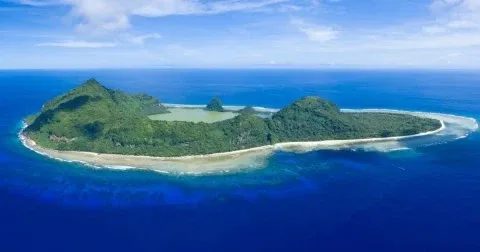
B. Polynesian history has fascinated the western world since Pacific cultures were first contacted by European explorers in the late 18th century. The small island of Tikopia, for many people – even for many Solomon Islanders – is so far away that it seems like a mythical land; a place like Narnia, that magical land in C. S. Lewis's classic, ‘The Chronicles of Narnia’. Maybe because of it – Tikopia, its people, and their cultures have long fascinated scholars, travellers, and casual observers. Like the pioneers' Peter Dillion, Dumont D’Urville and John Coleridge Patterson who visit and write about the island in the 1800s, Raymond Firth is one of those people captured by the alluring attraction of Tikopia. As a result, he had made a number of trips to the island since the 1920s and recorded his experiences, observations, and reflections on Tikopia, its people, cultures and the changes that have occurred.
C. While engaged in the study of the kinship and religious life of the people of Tikopia, Firth made a few observations on their tattooing. Brief though these notes are, they may be worth putting on record as an indication of the sociological setting of the practice in this primitive Polynesian community. The origin of the English word 'tattoo’ actually comes from the Tikopia word ‘tatau’. The word for tattoo marks, in general, is tau, and the operation of tattooing is known as ta tau, ta being the generic term for the act of striking.
D. The technique of tattooing was similar through Polynesia. Traditional tattoo artists create their indelible tattoos using pigment made from the candlenut or kukui nut. First, they burn the nut inside a bowl made of half a coconut shell. They then scrape out the soot and use a pestle to mix it with liquid. Bluing is sometimes added to counteract the reddish hue of the carbon-based pigment. It also makes the outline of the inscribed designs bolder on the dark skin of tattooing subjects.
E. For the instruments used when tattooing, specialists used a range of chisels made from albatross wing bone which were hafted onto a handle which was made from the heartwood of the bush and struck with a mallet. The tattooer began by sketching with charcoal a design on the supine subject, whose skin at that location was stretched taut by one or more apprentices. The tattooer then dipped the appropriate points – either a single one or a whole comb – into the ink (usually contained in a coconut - shell cup) and tapped it into the subject’s skin, holding the blade handle in one hand and tapping it with the other. The blood that usually trickled from the punctures was wiped away either by the tattooer or his apprentice, the latter having also inevitably painful – a test of fortitude that tattooers sought to shorten by working as fast as possible. In fact, tattoos nearly always festered and often led to sickness – and in some cases death.
F. In ancient Polynesian society, nearly everyone was tattooed. It was an integral part of ancient culture and was much more than a body ornament. Tattooing indicated ones' genealogy and/or rank in society. It was a sign of wealth, of strength and of the ability to endure pain. Those who went without them were seen as persons of lower social status. As such, chiefs and warriors generally had the most elaborate tattoos. Tattooing was generally begun at adolescence, and would often not be completed for a number of years. Receiving tattoos constituted an important milestone between childhood and adulthood, and was accompanied by many rites and rituals. Apart from signalling status and rank, another reason for the practice in traditional times was to make a person more attractive to the opposite sex.
G. The male facial tattoo is generally divided into eight sections of the face. The centre of the forehead designated a person’s general rank. The area around the brows designated his position. The area around the eyes and the nose designated his hapu, or sub-tribe rank. The area around the temples served to detail his signature. This signature was once memorised by tribal chief's who used it when buying property, signing deeds, and officiating orders. The cheek area designated the nature of the person’s work. The chin area showed the person’s mana. Lastly, the jaw area designated a person’s birth status.
H. A person’s ancestry is indicated on each side of the face. The left side is generally the father’s side, and the right side is the mother’s. The manutahi design is worked on the men’s back. It consists of two vertical lines drawn down the spine, with short vertical lines between them. When a man had the manutahi on his back, he took pride in himself. At gatherings of the people he could stand forth in their midst and display his tattoo designs with songs. And rows of triangles designed on the men’s chest indicate his bravery.
I. Tattoo was a way of delivering information about its owner. It’s also a traditional method to fetch spiritual power, protection and strength. The Polynesians use this as a sign of character, position and levels in a hierarchy. Polynesian people believe that a person’s mana, their spiritual power or life force, is displayed through their tattoo.
Questions
Questions 1-4
Do the following statements agree with the information given in the Reading Passage?
In boxes 1-4 on your answer sheet, write-
YES if the statement agrees with the information
NO if the statement contradicts the information
NOT GIVEN If there is no information on this
1. Scientists like to do research in Tikopia because this tiny place is of great remoteness.
2. Firth was the first scholar to study Tikopia.
3. Firth studied the culture differences on Tikopia as well as on some other islands of the Pacific.
4. The English word ‘tattoo’ evolved from the local language of the island.
Questions 5-9
Label the diagram below.
Choose NO MORE THAN TWO WORDS from Reading Passage for each answer.
Write your answers on boxes 5-9 in your answer sheet.

Questions 10-14
Complete the notes below.
Choose NO MORE THAN TWO WORDS from the passage for each answer.
Write your answers on boxes 10-14 in your answer sheet.
Location On The Body: Significance
10. ___________ of male face: General tank
11. ___________ of male face: Prestige
Female’s right side of the face: 12. ___________.
Location on the body: Significance : Geometric patterns
Male back : Sense of pride : 13. ___________.
Male chest : Bravery : 14 ___________.
Answers for Tikopia With Explanations
Tikopia reading answers with explanations given below. It will be beneficial to rectify the mistakes in your answering process.
(Note: The language highlighted in bold refers to the passage's location and answer. The explanatory sentences from the reading passage are shown in italics.)
1. Answer: Yes
Explanation: It is discussed in Paragraph B that the small island of Tikopia seems like a mythical land, perhaps because the Tikopia people and their cultures have long fascinated scholars, travellers, and casual observers. Furthermore, pioneers like Peter Dillion, Dumont D'Urville, and John Coleridge Patterson, visited and wrote about the island in the 1800s, So, the assertion that scientists like to do research in Tikopia because this tiny place is so remote is accurate.
2. Answer: No
Explanation: In Paragraph B, Last Fourth Line, it is discussed that Raymond Firth is one of those people captured by the alluring attraction of Tikopia. Since the 1920s, he has made a number of trips to the island and recorded the cultures and changes of its people, as well as his experiences, observations, and reflections on Tikopia. Therefore, the statement that Firth was the first scholar to study Tikopia is false because there is no mention of him being the first scholar.
3. Answer: Not Given
Explanation: There is no context for the following sentence and it is not included in the text.
4. Answer: Yes
Explanation: In Paragraph C, Line 4, it is apparent that the origin of the English word 'tattoo’ actually comes from the Tikopia word ‘tatau’. This implies that the English word ‘tattoo’ evolved from the local language of the island. Thus, the claim is accurate.
5. Answer: Coconut shell
Explanation: It can be seen from Paragraph D, Line 1, that traditional tattoo artists create their indelible tattoos using pigment made from the candlenut or kukui nut. First, they burn the nut inside a bowl made of half a coconut shell. This suggests that coconut shells were used by artists to create indelible tattoos.
6. Answer: Soot
Explanation: It is clearly illustrated in Paragraph D, Line 4, that they then scrape out the soot and use a pestle to mix it with liquid. This sentence signifies that bowls made of coconut shells were burned to get soot material inside them.
7. Answer: Liquid
Explanation: In Paragraph D, Line 4, it is discussed that they scrape out the soot and use a pestle to mix it with liquid. This line refers to the fact that coconut shells were used by artists to create indelible tattoos, then were burned to get soot material inside them by stirring them with liquid. Thus, the answer is liquid.
8. Answer: Hearwood
Explanation: It is mentioned in Paragraph E that the instruments used when tattooing was a range of chisels made from the heartwood of the bush and struck with a mallet. This infers that specialists used a range of chisels made from heartwood of the bush and struck with a mallet while tattooing.
9. Answer: Wing bone
Explanation: In Line 3 of Paragraph E, it is clearly stated that the instruments used when tattooing were a range of chisels made from albatross wing bone that were hafted onto a handle that was made from the heartwood of the bush and struck with a mallet. This indicates a range of chisels produced from the wing bones of seabirds by specialists.
10. Answer: (the) Forehead
Explanation: In Paragraph G, the introductory line reveals the information that the male facial tattoo is generally divided into eight sections of the face. The centre of the forehead designated a person’s general rank. So, the forehead is the significant body location of the male face in general.
11. Answer: Chin (area)
Explanation: In Paragraph G, Last Line, it is said that the chin area showed the person’s mana. Here, mana means moral authority; prestige. Thereby, the chin area is the prestige of the male face.
12. Answer: Mother’s ancestry
Explanation: In Paragraph H, Line 1, it is pointed out that a person’s ancestry is indicated on each side of the face. The left side is generally the father’s side, and the right side is the mother’s. So, the female side of the face is the mother’s ancestry.
13. Answer: Vertical lines
Explanation: In Paragraph H, it is narrated that the manutahi design is worked on the men’s back. It consists of two vertical lines drawn down the spine, with short vertical lines between them. When a man had the manutahi on his back, he took pride in himself. Therefore, in geometric patterns, the sense of pride for male backs is vertical lines.
14. Answer: Triangles
Explanation: In the last line of paragraph H, it is signified that rows of triangles designed on the man’s chest indicate his bravery. Thus, triangles designed on the chest refer to bravery.
Other Reading Tests

About Author Roshan Sunthar
Roshan Sunthar is a study abroad expert as well as a renowned writer and author in international education. His academic excellence and 5+ years of work experience give him in-depth knowledge of international standardised exams and test preparation in IELTS, TOEFL, GRE, PTE, SAT, etc. The study materials he prepares incorporate exam-like questions. He’s also an expert in writing Statement of Purposes (SOPs) and Letter of Recommendations (LORs) for college admissions. He usually spends his leisure time watching English classics and documentaries, travelling, etc.
Kanan.co is a trusted study abroad consultancy offering comprehensive services, resources, and solutions for students and education institutions. We support students at every stage of their global education journey, ensuring a smooth and guided experience. Along with test preparation for IELTS, GRE, TOEFL, and SAT, we provide expert services such as SOP writing, visa guidance, accommodation support, scholarship assistance, and education loan support. Our expertise and commitment to excellence make us a reliable partner for students pursuing international education.
Free Online Mock Test 2026
Practice our mock test worth Rs. 25000 for Free and know your IELTS score!








Global Headquarters
Kanan Int EdTech Inc
320 Bay Street, Suite 321 (Spaces), Toronto ON, Canada M5B 1N9
Indian Headquarters
Kanan International Pvt. Ltd.
D-wing, 2nd Floor, Trident Complex, Ellora Park Vadiwadi Road, Vadodara, Gujarat 390007
IT/ Digital Campus
Kanan International Pvt. Ltd
Old, New No 3, 2nd Floor, 1A, Dr Sadasivam Rd, T. Nagar, Chennai, Tamil Nadu 600017
Our branches
- Bardoli
- Bharuch
- Chennai
- Dehradun
- Gurugram
- Himatnagar
- Karnal
- Nadiad
- Navsari
- Palanpur
- Rajkot
- Vadodara
- Valsad
- Vallabh Vidyanagar
- Vapi
Study Abroad
Test Prep
Top Universities
Consultants
IELTS Centers
GRE Centers
TOEFL Centers
SAT Centers
Language Courses in Vadodara
Study Abroad Calculators
Featured Blogs
Study Abroad Consultants in Chennai
Study Abroad Consultants in Surat
Study Abroad Consultants in Navsari
Study Abroad Consultants in Bardoli
Study Abroad Consultants in Ahmedabad
Study Abroad Consultants in Anand
Study Abroad Consultants in Khanna
Study Abroad Consultants in Nadiad
Study Abroad Consultants in Vadodara
Study abroad consultants in Valsad
Copyright © 2026 KANAN.CO All rights reserved.