- Study Abroad
- / ielts
- / how baby talk gives infant brains a boost reading answers
How Baby Talk Gives Infant Brains A Boost Reading Answers


Author
19-09-2025

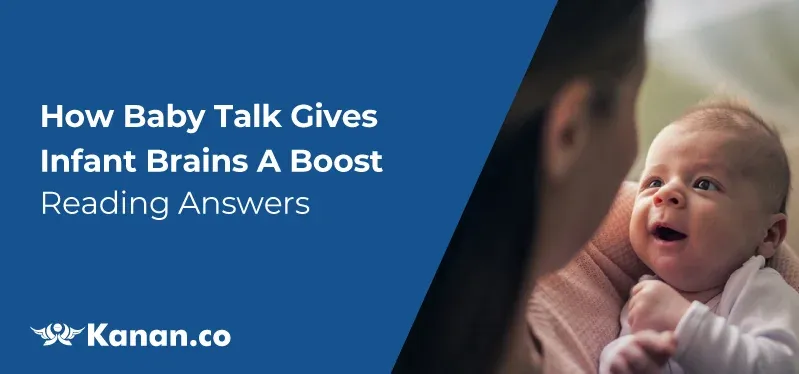
How Baby Talk Gives Infant Brains A Boost Reading answers practice test is provided with answers and explanations. This passage comprises 13 questions divided into three question types - list selection, summary completion, and multiple choice questions.
Table of contents:
- Solution for How Baby Talk Gives Infant Brains A Boost
- How Baby Talk Gives Infant Brains A Boost IELTS Reading Practice Test
- Passage
- Questions
- Answers with Explanations
Solution for How Baby Talk Gives Infant Brains A Boost
How Baby Talk Gives Infant Brains A Boost Reading answers are listed in the table below. Check the answers with our answer table, then correct any mistakes.
Answer Table
| 1. B | 5. Recording Devices | 9. (audio-recording), Vests | 13. E |
| 2. C | 6. Father | 10.Vocabulary | |
| 3. A | 7. Bridge Hypothesis | 11. F | |
| 4. B | 8. Repertoire | 12. A |

How Baby Talk Gives Infant Brains A Boost IELTS Reading Practice Test - Exam Review
Check out our YouTube Channel to Practice Full-Length IELTS Reading Tests Daily

How Baby Talk Gives Infant Brains A Boost Reading answers are given here, which will help you practise your reading module. Skim and scan the passage to grasp the ideas efficiently. It will help you to answer the questions.
Passage
We’ve provided the reading passage of How Baby Talk Gives Infant Brains A Boost. Read the passage and carefully complete the questions. Check the answers with our How Baby Talk Gives Infant Brains A Boost reading answers with locations.
How Baby Talk Gives Infant Brains A Boost
A
The typical way of talking to a baby – high-pitched, exaggerated and repetitious – is a source of fascination for linguists who hope to understand how ‘baby talk’ impacts on learning. Most babies start developing their hearing while still in the womb, prompting some hopeful parents to play classical music to their pregnant bellies. Some research even suggests that infants are listening to adult speech as early as 10 weeks before being born, gathering the basic building blocks of their family’s native tongue.
B
Early language exposure seems to have benefits to the brain – for instance, studies suggest that babies raised in bilingual homes are better at learning how to mentally prioritize information. So how does the sweet if sometimes absurd sound of infant-directed speech influence a baby’s development? Here are some recent studies that explore the science behind baby talk.
C
Fathers don’t use baby talk as often or in the same ways as mothers – and that’s perfectly OK, according to a new study. Mark VanDam of Washington State University at Spokane and colleagues equipped parents with recording devices and speech-recognition software to study the way they interacted with their youngsters during a normal day. ‘We found that moms do exactly what you’d expect and what’s been described many times over,’ VanDam explains. ‘But we found that dads aren’t doing the same thing. Dads didn’t raise their pitch or fundamental frequency when they talked to kids.’ Their role may be rooted in what is called the bridge hypothesis, which dates back to 1975. It suggests that fathers use less familial language to provide their children with a bridge to the kind of speech they’ll hear in public. ‘The idea is that a kid gets to practice a certain kind of speech with mom and another kind of speech with dad, so the kid then has a wider repertoire of kinds of speech to practice,’ says VanDam.
D
Scientists from the University of Washington and the University of Connecticut collected thousands of 30-second conversations between parents and their babies, fitting 26 children with audio-recording vests that captured language and sound during a typical eight-hour day. The study found that the more baby talk parents used, the more their youngsters began to babble. And when researchers saw the same babies at age two, they found that frequent baby talk had dramatically boosted vocabulary, regardless of socioeconomic status. ‘Those children who listened to a lot of baby talk were talking more than the babies that listened to more adult talk or standard speech,’ says Nairán Ramirez-Esparza of the University of Connecticut. ‘We also found that it really matters whether you use baby talk in a one-on-one context,’ she adds. ‘The more parents use baby talk one-on-one, the more babies babble, and the more they babble, the more words they produce later in life.’
E
Another study suggests that parents might want to pair their youngsters up so they can babble more with their own kind. Researchers from McGill University and Université du Québec à Montréal found that babies seem to like listening to each other rather than to adults – which may be why baby talk is such a universal tool among parents. They played repeating vowel sounds made by a special synthesising device that mimicked sounds made by either an adult woman or another baby. This way, only the impact of the auditory cues was observed. The team then measured how long each type of sound held the infants’ attention. They found that the ‘infant’ sounds held babies’ attention nearly 40 percent longer. The baby noises also induced more reactions in the listening infants, like smiling or lip moving, which approximates sound making. The team theorizes that this attraction to other infant sounds could help launch the learning process that leads to speech. ‘It may be some property of the sound that is just drawing their attention,’ says study co-author Linda Polka. ‘Or maybe they are really interested in that particular type of sound because they are starting to focus on their own ability to make sounds. We are speculating here but it might catch their attention because they recognize it as a sound they could possibly make.’
F
In a study published in Proceedings of the National Academy of Sciences, a total of 57 babies from two slightly different age groups – seven months and eleven and a half months – were played with a number of syllables from both their native language (English) and a non-native tongue (Spanish). The infants were placed in a brain-activation scanner that recorded activity in a brain region known to guide the motor movements that produce speech. The results suggest that listening to baby talk prompts infant brains to start practising their language skills. ‘Finding activation in motor areas the baby brain is engaged in trying to talk back right from the start, and suggests that seven-month-olds’ brains are already trying to figure out how to make interesting finding was that while the seven-month-olds responded to all speech sounds regardless of language, the brains of the older infants worked harder at the motor activations of non-native sounds compared to native sounds. The study may have also uncovered a process by which babies recognize differences between their native language and other tongues.
Questions
Questions 1-4
Look at the following ideas and the list of researchers below.
Match each idea with the correct researcher, A, B or C.
Write the correct letter, A, B or C, in the boxes 1-4 on your answer sheet.
NB You may use any letter more than once.
1. The importance of adults giving babies individual attention when talking to them.
2. The connection between what babies hear and their own efforts to create speech.
3. The advantage for the baby of having two parents each speaking in a different way.
4. The connection between the amount of baby talk babies hear and how much vocalising they do themselves.
LIST OF RESEARCHERS:
- Mark VanDam
- Nairan Ramirez-Esparza
- Patricia Khul
Questions 5-10
Complete the summary below.
Choose NO MORE THAN TWO WORDS from the passage for each answer.
Write your answers in boxes 5-10 on your answer sheet.
Research into how parents talk to babies
Researchers at Washington State University used 5._____ together with specialised computer programs, to analyse how parents interacted with their babies during a normal day. The study revealed that 6._____ tended not to modify their ordinary speech patterns when interacting with their babies. According to an idea know as the 7._____ they may use a more adult type of speech to prepare infants for the language they will hear outside the family home. According to the researchers, hearing baby talk from one parent and ‘normal’ language from the other expands the baby’s 8._____ of types of speech which they can practise.
Meanwhile, another study carried out by scientists from the University of Washington and the University of Connecticut recorded speech and sout using special 9._____ that the babies were equipped with. When they studies the babies again at age two, the found that those who had heard a lot of baby talk in infancy=ncy had a much larger 10.______ than those who had not.
Questions 11-13
Reading passage 2 has six paragraphs, A-F.
Which paragraph contains the following information?
Write the correct letter, A-F, in boxes 11-13 on your answer sheet.
11. A reference to a change which occurs in babies’ brain activity before the end of their first year.
12. An example of what some parents do for their baby’s benefit before birth.
13. A mention of babies’ preference for the sounds that other babies make.
Answers for How Baby Talk Gives Infant Brains A Boost With Explanations
How Baby Talk Gives Infant Brains A Boost Reading answers with explanations is given below. Refer to the following answers with an explanation section in order to correct your errors.
(Note: The text in italics mentions the location and referring lines written in the reading passage.)
1. Answer: B
Explanation: In 8th and 9th lines of paragraph D, “that listened to more adult talk or standard speech,’ says Nairán Ramirez-Esparza of the University of Connecticut. ‘We also found that it really matters whether you use baby talk in a one-on-one context”.
2. Answer: C
Explanation: In the 7th line of paragraph F, “Finding activation in motor areas the baby brain is engaged in trying to talk back right from the start”.
3. Answer: A
Explanation: In the last three lines of paragraph C, “ The idea is that a kid gets to practise a certain kind of speech with mom and another kind of speech with dad, so the kid then has a wider repertoire of kinds of speech to practise,’ says VanDam”.
4. Answer: B
Explanation: In 5th, 6th and 7th lines of paragraph D, “And when researchers saw the same babies at age two, they found that frequent baby talk had dramatically boosted vocabulary, regardless of socioeconomic status. ‘Those children who listened to a lot of baby talk were talking more than the babies”.
5. Answer: recording devices
Explanation: In the 3rd line of paragraph C, “equipped parents with recording devices”.
6. Answer: father
Explanation: In the 1st line of paragraph C, “Fathers don’t use baby talk as often or in the same ways as mothers”.
7. Answer: bridge hypothesis
Explanation: In the 8th line of paragraph C, “the bridge hypothesis”.
8. Answer: repertoire
Explanation: In the last line of paragraph C, “kind of speech with dad, so the kid then has a wider repertoire of kinds of speech to”.
9. Answer: Audio-recording vests
Explanation: In the 3rd line of paragraph D, “audio-recording vests that capture language”.
10. Answer: - vocabulary
Explanation: In the 6th line of paragraph D, “baby talk had dramatically boosted vocabulary, regardless of socioeconomic status”.
11. Answer: F
Explanation: In the 7th, 8th, 9th, 10th and 11th lines of paragraph F, “Finding activation in motor areas the baby brain is engaged in trying to talk back right from the start, and suggests that seven-month-olds’ brains are already trying to figure out how to make interesting finding was that while the seven-month-olds responded to all speech sounds regardless of language, the brains of the older infants worked harder at the motor activations of non-native sounds compared to native sounds”.
12. Answer: A
Explanation: In the entire paragraph A, “The typical way of talking to a baby – high-pitched, exaggerated and repetitious – is a source of fascination for linguists who hope to understand how ‘baby talk’ impacts on learning. Most babies start developing their hearing while still in the womb, prompting some hopeful parents to play classical music to their pregnant bellies. Some research even suggests that infants are listening to adult speech as early as 10 weeks before being born, gathering the basic building blocks of their family’s native tongue”.
13. Answer: E
Explanation: In the 3rd and 4th lines of paragraph E, “babies seem to like listening to each other rather than to adults – which may be why baby talk is such a universal tool among parents”.
Other Reading Tests

About Author Dinesh Pandiyan
Dinesh is a highly experienced content writer who specializes in language proficiency tests like IELTS, GRE, PTE, TOEFL, and study abroad. He provides valuable insights and tips to students on various modules of these tests, including reading, writing, speaking, and listening. His articles are well-researched, informative, and engaging, offering practical guidance to students looking to succeed in their academic pursuits. Additionally, Dinesh has coordinated with IELTS trainers to prepare test preparation materials, guides, practice tests, and mock tests, and worked closely with counsellors for study abroad consultancy, providing guidance on choosing the right institution, preparing for interviews, and writing effective statements of purpose (SOP) and letters of recommendation (LOR). Students can benefit from Dinesh's comprehensive knowledge and experience by checking out his articles.
Kanan International is a study abroad consultancy that offers reliable services, products, and solutions for students and education institutions. We support students throughout their study abroad journey, ensuring a hassle-free experience. Our expertise and commitment to excellence make us the go-to partner for expanding global horizons. The company provides coaching for IELTS, GRE, TOEFL, and SAT exams and services like visa consultation, accommodation, scholarship assistance, and education loans.
Free Online Mock Test 2026
Practice our mock test worth Rs. 25000 for Free and know your IELTS score!








Global Headquarters
Kanan Int EdTech Inc
320 Bay Street, Suite 321 (Spaces), Toronto ON, Canada M5B 1N9
Indian Headquarters
Kanan International Pvt. Ltd.
D-wing, 2nd Floor, Trident Complex, Ellora Park Vadiwadi Road, Vadodara, Gujarat 390007
IT/ Digital Campus
Kanan International Pvt. Ltd
Old, New No 3, 2nd Floor, 1A, Dr Sadasivam Rd, T. Nagar, Chennai, Tamil Nadu 600017
Our branches
- Bardoli
- Bharuch
- Chennai
- Dehradun
- Gurugram
- Himatnagar
- Karnal
- Nadiad
- Navsari
- Palanpur
- Rajkot
- Vadodara
- Valsad
- Vallabh Vidyanagar
- Vapi
Study Abroad
Test Prep
Top Universities
Consultants
IELTS Centers
GRE Centers
TOEFL Centers
SAT Centers
Language Courses in Vadodara
Study Abroad Calculators
Featured Blogs
Study Abroad Consultants in Chennai
Study Abroad Consultants in Surat
Study Abroad Consultants in Navsari
Study Abroad Consultants in Bardoli
Study Abroad Consultants in Ahmedabad
Study Abroad Consultants in Anand
Study Abroad Consultants in Khanna
Study Abroad Consultants in Nadiad
Study Abroad Consultants in Vadodara
Study abroad consultants in Valsad
Copyright © 2026 KANAN.CO All rights reserved.