- Study Abroad
- / ielts
- / sunset for the oil business reading answers
Sunset For The Oil Business Reading Answers


Author
16-09-2025

You can prefer the correct answer of Sunset for the oil business reading answers from here directly, and can recognize and correct your responses mistakes.
| 1. YES | 5. YES | 9. competitive | 13. A |
| 2. NOT GIVEN | 6. controversial | 10. E | 14. C |
| 3. NO | 7. tapped | 11. D | |
| 4. NO | 8. expensive | 12. B |

In this article, the whole passage, and Sunset for the oil business reading answers with three different question types are given here. IELTS reading is difficult for students to solve; thus, after applying appropriate tricks and tips, they can make this module much easier to solve.
To gain all the knowledge about IELTS reading question types, you have to spend more time on it. Check out the three different reading question types from this article:
- IELTS Reading Matching Features
- IELTS Reading Note Completion
- IELTS Reading Yes No Not Given
Check out our YouTube Channel to Practice Full-Length IELTS Reading Tests Daily

IELTS Reading Passage - Sunset For The Oil Business
Sunset for the oil business
The world is about to run out of oil. Or perhaps not. It depends whom you believe…
- Representatives of the Department Analysis Centre (ODAC) lately convended in London to present technical evidence in support of their dire forecast that the world is dangerously close to running out of oil. Notable figures of the time, such as geologist Colin Campbell, refuted the opposing viewpoints put forward by the American geological survey and the international energy agency, which contradicted the results they found. Dr. Campbell has even questioned the shocking level of incompetence, denial, and obfuscation on this issue that has been demonstrated by the government, business, and academia.
- So, is oil really becoming rare? The answer is simple: Yes. Nobody doubts that oil is, for all intents and purposes, a nonrenewable resource that will eventually run out, whether in a few years or a few decades. The more difficult question is identifying exactly when oil will become limited. And the solution to this question requires ascending Hubbert's summit.
- A Shell geologist with a legendary reputation among depletion specialists, M. King Hubbert, predicted in 1956 that oil production in the United States would reach its peak in the early 1970s and then gradually fall in a bell-shaped curve. His prediction was controversial at the time, and many disbelieve it. By 1970, however, actual data demonstrated that he was correct: oil output in the United States reached its apex in 1970 and has been decreasing ever since.
- Dr. Hubbert's research was founded on the notion that oil production in a new location often increases rapidly initially when the most accessible and affordable reserves are tapped. Over time, It becomes more costly to produce oil as reserves age and productivity drops. Hence, the oil from this sector becomes less competitive compared to alternative fuels or oil from other regions. As a consequence, output generally slows down, tapers off, and decreases. He reasoned that this resulted in a bell-shaped pattern.
- His accurate estimation has influenced a new generation of geologists to employ his approach on a worldwide scale. At ODAC, chief among the experts are most concerned that the global peak in production will occur within the next decade. The peak should have occurred already; he now thinks it is just around the corner, Dr. Campbell contended. This dismal chorus now includes a major player. In his recent book, "The View from Hubbert's Peak," Kenneth Deffeyes of Princeton University contends that the world's oil output might reach its apex as early as 2004.
- It is in direct contrast to conventional wisdom. In part to rebut Dr. Campbell's arguments, America’s Geological Survey conducted a comprehensive analysis of oil depletion last year that put the peak of production some decades off. The International Energy Agency (IEA) has recently released a new "World Energy Outlook" that estimates residual oil stocks will be sufficient to supply demand until 2020. René Dahan, one of ExxonMobil's top executives, goes even further: with the conviction of the world's biggest energy firm, he declares that the globe will continue to be drenched in oil for the next seventy years.
- Who is correct? It is advantageous to look into the pathetic history of oil forecasting in order to comprehend these wildly differing viewpoints. Since the 1970s, doomsayers have prophesied that oil wells would run empty, yet so far the oil continues to flow. Several doomsday forecasts for the year 2000 generated in the aftermath of the energy crises of the 1970s proved to be too negative. The U.S. Department of Energy estimated that oil would reach $150 per barrel in 2000 dollars; Exxon expected that it would sell for $100.
- An economic consultancy, Michael Lynch of DRI-WEFA, is one of the few trustworthy sources for oil price predictions. Dr. Lynch analyzes the accuracy of those previous predictions in the new research. He uncovers both systematic bias and repeated errors, which points to methodological flaws as the source of the difficulty rather than inadequate data merely. In particular, he blames Hubbert style analysts for generating stagnant predictions about how much oil is "ultimately recoverable" underground. This is a term used by the oil industry to describe the quantity of oil that may be extracted from the earth.
- This is what will ultimately determine whether the pessimists or optimists are correct: technical progress. The first group is suspicious of promises that deep-water drilling and better recovery would soon usher in technological revolutions. Dr. Deffeyes accurately depicts this post technological worldview. He claims it is tough to ask for new technology at this time since the industry has already spent billions on technological research and most of the wheels have been created.
- Yet, technological optimists argue that the oil industry has just seen the beginning of the technological revolution. The current average recovery rate (the quantity of oil that can be recovered from a reservoir) is only between 30 and 35 percent. Optimists in the industry estimate that within a decade, new techniques now under research might increase this percentage to between 50 and 60%.
- It could be difficult to invest in the sector given its extraordinary innovation history. The nationalisations in the 1970s compelled Big Oil to invest in exploring reserves in distant, high-cost areas like the North Sea and Alaska, refuting Dr. Hubbert's hypothesis that inexpensive reserves would be exploited first. In the past two decades, the cost of identifying and developing wells has been lowered from over $20 per barrel to approximately $6 per barrel as a result of the ensuing upstream expenditures. At less than $4 per barrel, the price of oil has dropped by more than half.
- Nevertheless, the majority of the world's oil is currently in production from ageing reserves that are gradually diminishing, suggesting that such miracles will not come cheap. With proper investment, the world will be able to avoid an oil production peak within the next two decades, the International Energy Agency has determined. So how much is required? The agency estimates that oil corporations would be required to spend $1 trillion in non-OPEC nations over the next decade to replace the production lost at those ageing fields and keep up with the world's growing demand for oil. That's a huge number.
Sunset for the oil business IELTS Reading Questions
Questions 1-5
Match each statement with the correct person, A-E.
Write the correct letter, A-E in your answer sheet.
NB You may use any letter more than once.
List of People
- Colin Campbell
- M. King Hubbert
- Kenneth Deffeyes
- Rene Dahan
- Michael Lynch
- ..................... has found fault in the geological research procedure
- ..................... has provided the longest-range prediction regarding oil supply
- ..................... has persuaded others that oil production will follow a certain model
- ..................... has accused fellow scientists of refusing to see the truth
- ..................... has expressed doubt over whether upgrade methods of extracting oil are possible.
Recommend the IELTS Reading Matching Features to know more.
Questions 6-9
Complete the notes below.
Choose ONE WORD ONLY from the passage for each answer.
Many people believed Hubbert’s theory was 6. ..................... when it was originally presented.
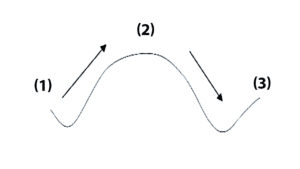
(1) When an oilfield is 7. ....................., it is easy to…
(2) The recovery of the oil gets more 8. .................... as the reservoir gets older
(3) The oilfield can’t be as 9. .................... as other areas.
Practice with the IELTS Reading Note Completion to score more.
Questions 10-14
Answer the question from Yes/ No or Not Given.
YES if the statement agrees with the views of the writer
NO if the statement contradicts the views of the writer
NOT GIVEN if it is impossible to say what the writer thinks about this
10. Hubbert has a high-profile reputation amongst ODAC members.
11. Oil is likely to last longer than some other energy sources.
12. The majority of geologists believe that oil will start to run out sometime this decade.
13. Over 50 percent of the oil we know about is currently being recovered.
14. History has shown that some of Hubbert’s principles were mistaken.
Learn more about the IELTS Reading Yes No Not Given questions to score well.
Sunset for the oil business reading answers with explanations
Prefer Sunset for the oil business reading answers with explanation in order to validate your answers and identify any errors.
1. E
Explanation: In Paragraph H, The writer clearly mentioned that, ‘Dr. Lynch analyzes the accuracy of those previous predictions in the new research. He uncovers both systematic bias and repeated errors, which points to methodological flaws as the source of the difficulty rather than inadequate data merely.’ It is clearly mentioned that Dr. Michael Lynch, discovered fault in the geological research procedure.
2. D
Explanation: In Paragraph F, it consists that, ‘René Dahan, one of ExxonMobil's top executives, goes even further: with the conviction of the world's biggest energy firm, he declares that the globe will continue to be drenched in oil for the next seventy years.’ It is clearly mentioned that Rene Dahan provided the longest-range prediction regarding oil supply.
3. B
Explanation: In Paragraph C, The writer mentioned that, ‘M. King Hubbert, predicted in 1956 that oil production in the United States would reach its peak in the early 1970s and then gradually fall in a bell-shaped curve. His prediction was unpopular at the time, and many disbelieve it. By 1970, however, actual data demonstrated that he was correct: oil output in the United States reached its apex in 1970 and has been decreasing ever since…..His accurate estimation has influenced a new generation of geologists to employ his approach on a worldwide scale…’ And the following information makes clear that he has persuaded others that oil production will follow a certain model.
4. A
Explanation: In Paragraph A, it consists that, ‘Prominent figures of the time, such as geologist Colin Campbell, denied opposing views offered by the American geological survey and the international energy agency that contradicted their conclusions. Dr. Campbell has even questioned the shocking level of incompetence, denial, and obfuscation on this issue that has been demonstrated by the government, business, and academia.’
5. C
Explanation: In Paragraph I, The writer mentioned that, ‘Dr. Deffeyes accurately depicts this post technological worldview. He claims it is tough to ask for new technology at this time since the industry has already spent billions on technological research and most of the wheels have been created.’
6. controversial
Explanation: In Paragraph C, it consists that, ‘M. King Hubbert, predicted in 1956 that oil production in the United States would reach its peak in the early 1970s and then gradually fall in a bell-shaped curve. His prediction was controversial at the time, and many disbelieve it.’
7. tapped
Explanation: In Paragraph D, The writer mentioned that, ‘Dr. Hubbert's research was founded on the notion that oil production in a new location often increases rapidly initially when the most accessible and affordable reserves are tapped.’
8. costly
Explanation: In Paragraph D, it states that, ‘Over time, It becomes more costly to produce oil as reserves age and productivity drops.’
9. competitive
Explanation: In Paragraph D, The writer mentioned that, ‘Hence, the oil from this sector becomes less competitive compared to alternative fuels or oil from other regions.’
10. Yes
Explanation: In Paragraph E, it states that, ‘His accurate estimation has influenced a new generation of geologists to employ his approach on a worldwide scale. At ODAC, chief among the experts are most concerned that the global peak in production will occur within the next decade.’ We can say that the answer is yes.
11. Not given
Explanation: In the passage, the writer mentioned about the oil and the shortage of oil; however, they did not mention anything about that oil is likely to last longer than some other energy sources.
12. No
Explanation: In Paragraph F, it states that, ‘America’s Geological Survey conducted a comprehensive analysis of oil depletion last year that put the peak of production some decades off. The International Energy Agency (IEA) has recently released a new "World Energy Outlook" that estimates residual oil stocks will be sufficient to supply demand until 2020. René Dahan declares that the globe will continue to be drenched in oil for the next seventy years.’ It says that soil will not run out in this decade.
13. No
Explanation: In Paragraph F, The writer mentioned that, ‘The current average recovery rate (the quantity of oil that can be recovered from a reservoir) is only between 30 and 35 percent.’ It says that only 30 to 35 percent is being recovered, not 50 percent.
14. Yes
Explanation: In Paragraph C, it states that, ‘Hubbert, predicted in 1956 that oil production in the United States would reach its peak in the early 1970s and then gradually fall in a bell-shaped curve. His prediction was controversial at the time, and many disbelieve it. By 1970, however, actual data demonstrated that he was correct: oil output in the United States…’ It mentioned that after time they demonstrated that he was correct.
Check the other reading passages
- Inside the mind of the consumer reading answers
- Votes for women reading answers
- COD in trouble reading answers
Conclusion
"Sunset for the oil industry reading answers" is a helpful resource that may improve your comprehension and response time, as well as your vocabulary and general knowledge. All the best!

About Author Roshan Sunthar
Roshan Sunthar is a study abroad expert as well as a renowned writer and author in international education. His academic excellence and 5+ years of work experience give him in-depth knowledge of international standardised exams and test preparation in IELTS, TOEFL, GRE, PTE, SAT, etc. The study materials he prepares incorporate exam-like questions. He’s also an expert in writing Statement of Purposes (SOPs) and Letter of Recommendations (LORs) for college admissions. He usually spends his leisure time watching English classics and documentaries, travelling, etc.
Kanan.co is a trusted study abroad consultancy offering comprehensive services, resources, and solutions for students and education institutions. We support students at every stage of their global education journey, ensuring a smooth and guided experience. Along with test preparation for IELTS, GRE, TOEFL, and SAT, we provide expert services such as SOP writing, visa guidance, accommodation support, scholarship assistance, and education loan support. Our expertise and commitment to excellence make us a reliable partner for students pursuing international education.
Free Online Mock Test 2026
Practice our mock test worth Rs. 25000 for Free and know your IELTS score!








Global Headquarters
Kanan Int EdTech Inc
320 Bay Street, Suite 321 (Spaces), Toronto ON, Canada M5B 1N9
Indian Headquarters
Kanan International Pvt. Ltd.
D-wing, 2nd Floor, Trident Complex, Ellora Park Vadiwadi Road, Vadodara, Gujarat 390007
IT/ Digital Campus
Kanan International Pvt. Ltd
Old, New No 3, 2nd Floor, 1A, Dr Sadasivam Rd, T. Nagar, Chennai, Tamil Nadu 600017
Our branches
- Bardoli
- Bharuch
- Chennai
- Dehradun
- Gurugram
- Himatnagar
- Karnal
- Nadiad
- Navsari
- Palanpur
- Rajkot
- Vadodara
- Valsad
- Vallabh Vidyanagar
- Vapi
Study Abroad
Test Prep
Top Universities
Consultants
IELTS Centers
GRE Centers
TOEFL Centers
SAT Centers
Language Courses in Vadodara
Study Abroad Calculators
Featured Blogs
Study Abroad Consultants in Chennai
Study Abroad Consultants in Surat
Study Abroad Consultants in Navsari
Study Abroad Consultants in Bardoli
Study Abroad Consultants in Ahmedabad
Study Abroad Consultants in Anand
Study Abroad Consultants in Khanna
Study Abroad Consultants in Nadiad
Study Abroad Consultants in Vadodara
Study abroad consultants in Valsad
Copyright © 2026 KANAN.CO All rights reserved.