- Study Abroad
- / ielts
- / academic
- / reading
- / question types
- / matching sentence endings
IELTS academic reading matching sentence endings


Author
17-09-2025


IELTS academic reading matching sentence endings requires you to complete a list of incomplete statements with correct endings from the given list. Here your ability to understand the main concept of reading passage and interpretation skills in finding the correct sentence endings are tested.
In IELTS academic reading matching sentence endings, you will be given the first half of the sentence and the remaining sentence has to be completed by choosing the correct option from the list of headings given below. Read the text and use the keywords from the passage to choose the correct answer.
This is one of the IELTS academic reading question types where students struggle to answer and consume most of the IELTS academic reading section’s overall time. We have put together some suggestions and strategies to help you tackle IELTS academic reading matching sentence endings so that you can solve it at ease.
Check Out our YouTube Channel to Practice Full-Length IELTS Reading Tests Daily

Table of Contents
- IELTS academic reading matching sentence endings- Strategies & tips to solve
- Common Problems faced by students in solving matching sentence endings
- Skills Required to solve matching sentence endings
- Matching Sentence Endings Practice Exercise 1
- Matching Sentence Endings Practice Exercise 2
- Matching Sentence Endings Practice Exercise 3
- Matching Sentence Endings Practice exercise 4
- Matching Sentence Endings Practice Exercise 5
- Matching Sentence Endings Practice Exercise 6
- Matching Sentence Endings Practice Exercise 7
- Answers for Practice exercises
- Conclusion
IELTS academic reading matching sentence endings- Strategies & tips to solve
These IELTS academic reading matching sentence endings tips and strategies will guide you in answering this question type at ease.

- This question set requires you to complete a list of incomplete statements with correct endings from a list.
- Read the incomplete question statement and judge what it expresses, e.g. cause, consequence, purpose or contrast
- Go through the list of endings. You can see some options are unsuitable grammatically and contextually, i.e. they do not make any sense. It is safe to eliminate them right away.
- Now, identify the keyword(s) in the question statement and look for words or phrases with similar meanings in the passage. Read this portion of the passage and find the information that completes the meaning. Select the ending that conveys the same meaning.
- Remember, there may be some endings that contain keywords or information from this part. But, they may be only partially correct or irrelevant.
- Also remember, the question statements appear in progressive order, but the options are jumbled.
- Before you look at the endings,try to guess how the sentence will end.
- The question at the first takes more time because more options are given to workout for. But when you fix the correct answer for a question1 the upcoming options will be reduced, thus making it easier to find the options.
- By only matching the words you can’t form the complete sentence so don't just pick the words matching.
- Instead of finding exactly the same words, find out whether the examinant would have used synonyms and paraphrases.
- Begin looking for suitable matches now. Because of their grammatical structure or meaning, many possibilities will be incorrect.
Following these IELTS academic reading matching sentence endings tips & strategies and doing a lot of reading preparation and vocabulary practice is the greatest approach to increase your IELTS reading score.
Common Problems faced by students in solving matching sentence endings
- Trying to complete the answer by logic or by using grammar. It is a test for understanding the given text.
- Forgetting to match incomplete sentences with the endings instead of trying the endings to match with the text.
- Many people waste time in finding the exact matching words in a sentence.
- Failing to ensure the grammatical structure of two half haves of the sentences.
Skills Required to solve matching sentence endings
- Finding synonyms & paraphrasing.
- Skimming.
- Understanding the grammatical structures.
- Visualizing keywords.
- Taking the theme of the passage to make a prediction.
Also read: IELTS academic reading tips
Matching Sentence Endings Practice Exercise 1
Answer questions 1-5 which are based on the reading passage below.
The Penny Black Reading Passage
In 1840, the United Kingdom introduced the penny black, the first adhesive postage stamp issued anywhere in the world. For many years the postal service in the U.K. had been a very expensive service for ordinary people to use. The costs were prohibitive, a single letter sometimes costing a working person’s full day’s wage. The postal system also had many strange anomalies, such as certain categories of mail going free (and therefore being paid for by the charges on others), newspapers going for nothing, most mail being paid for by the addressee rather than by the sender, and so on.
There were moves for postal reform for many years, until eventually these moves started gathering some force through the attention of many, amongst whom Rowland Hill is the best known, and Robert Wallace, MP for Greenock, was instrumental.
The story is long and involved, but eventually, The Penny Postage Bill was passed by Parliament on 17 August 1839. Some basic elements of the plan were the lowering of postage rates for basic letters to one penny, the removal of certain idiosyncrasies, that prepayment would become normal, and the availability of printed envelopes, letter sheets, and labels to show prepayment. The “labels” were the penny black and twopence blue.
A bookseller and printer from Dundee, James Chalmers, holds a strong claim to be the actual inventor of the adhesive postage stamp. He is said to have been interested in postal reform from about 1822, and to have printed samples of his idea for printed gummed labels in August 1834. It seems that, although Hill also presented the idea of adhesive stamps, he was probably keener on the use of standard prepaid letter folders, such as were issued in 1840 using a design by William Mulready.
The new stamps went on sale on 1st May 1840 and were valid for postage from 6th May 1840 (although some were used during the 1st-5th May period). The Mulreadies were issued at the same time. Public reaction to these new items was quite the opposite to Rowland Hill’s expectations. The labels were well-received and admired; the Mulready design was lambasted and ridiculed. Initial supplies of the stamps were rushed through the printing and distribution process, but supplies soon caught up with requirements.
The stamps were printed in sheets of 240, engraved on steel plates, on gummed paper with a single small crown watermark on each stamp. Eleven different printing plates were used, and it is possible in almost every case to work out which plate any individual stamp was printed from by a few characteristics. Things like the positioning of the corner letters within their squares, the presence of the “O flaw”, which rays of the stars in the upper corners are broken at what points, and so on, can point to a correct plate identification, but more specialised literature is required in order to do this. Some plates are scarcer than others, plate 11 being the scarcest.
Every penny black stamp has letters in the lower two corners. These simply identify what sheet position the stamp occupied. When the printing plates were produced the lower squares were blank, and the letters were punched in by hand. The left square letter shows which horizontal row the stamp was in – the first row being A, the second B, and so on down to the twentieth row with T. The right square letter indicates the vertical column, again with A for the first column, B, C, and so on across to L for the last (twelfth) column. It should be noted therefore that each letter combination is just as common or as scarce as any other.
There were 68,158,080 penny blacks issued (yes, 68 million!), and even with only a 2% survival rate, there are likely to be about 1.3 million still in existence. The survival rate may well be considerably higher than 2%, as it should be remembered that in 1840 the use of envelopes was unusual, most letters being written, folded, and sealed with sealing wax; this meant that whenever a letter was filed in a lawyer’s office, bank, etc., the whole thing would be kept – letter and outer cover including the adhesive stamp.
From the collector's perspective, the physical condition of the stamp – any fault such as a thin, tear, crease, or stain will lower the value, and the number, size, and regularity of the margins make a big difference to value. The stamps were not perforated and had to be separated using scissors or a knife. As there was only about 1mm between one stamp and another, it was very easy to stray just a little and cut into the printed design of the stamp. A stamp with two full margins and perhaps a couple of other part margins is about average. Collectors will pay higher prices for examples with four good, wide, and even margins.
Questions 1-5
Complete each sentence with the correct ending, A–G, below.
Write the correct letter, A-G, as your answer to each question.
1 After reforms, most mails was
2 Each steel printing plate was
3 Every penny black was
4 Putting a letter in an envelope was
5 Keeping the borders of each stamp was
A Unusual in 1840.
B Able to print sheets of 240 stamps.
C Paid for by the sender.
D Very difficult to achieve.
E Very expensive to send.
F Designed with two letters in the bottom corners.
G Quickly accepted.
Matching Sentence Endings Practice Exercise 2
Answer questions 1-5 which are based on the reading passage below.
Music Piracy Reading Passage
In 1999, a nineteen-year-old student decided he wanted a fast and efficient way to share his favourite songs with his friends. But, he didn’t just want to make compilation tapes on cassettes. He wanted to do the sharing via the computer. The result was Napster. A file-sharing community that allowed Shawn Fanning and his friends to share all the mp3 files they ripped from their CD collections with each other…and 60 million other users. The rest would be history if it were not for one small issue – what they were doing was illegal.
At first, that stopped no one. Napster clones with marginally different peer-to-peer client-server architectures appeared. Gnutella networks, eDonkey, AudioGalaxy, Kazaa, FastTrack, Grokster, Limewire, Morpheus, BearShare, and countless others emerged totalling hundreds of millions of users sharing billions of megabytes of files. Add to that Usenet binaries and ICQ/IRC channels through which music, video, software, and other copyright materials had already been shared illicitly for years. This was still years before the advent of BitTorrent networks.
Figures have shown repeatedly that the rise of Napster and its ilk had actually caused a resurgence in lacklustre CD sales. Many users download lots of tracks but then buy the complete album on CD for the sake of having something more tangible to own. The whole file-sharing culture has also, it is claimed, boosted interest in music in much the same way that video piracy in the 1980s saw more people going to the cinema.
Nevertheless, it was inevitable that the copyright holders were going to be a little less than pleased with P2P. With support and advocacy from certain artists themselves, most notably Metallica’s Lars Ulrich and Dr Dre, the record industry began to fight this cultural sea change. Napster was shut down under court order, and many of the other early P2P systems followed. However, others sprang up to replace them almost as quickly as others were knocked down. The development of Bit Torrent has added a whole new approach to file sharing veiled with a layer of legitimacy.
In the meantime, more savvy agencies, namely Apple Corp and a Russian site going by the name of Allofmp3.com, as well as a few other innovators, had latched on to the fact that mp3 downloads, despite the fears of the wider industry would be the way forward.
The difference between these paid-for downloads (Allofmp3 ′s dubious international legality aside) and the original incarnation of Napster is that users had to pay and royalties were apparently passed on to the record companies, and one would hope, the artists themselves. Ultimately, the Napster name was resurrected as a paid-for service endorsed by the record industry and others followed suit.
Questions 1-5
Complete each sentence with the correct ending, A-H, from the box below.
Write the correct letter, A-H, as your answer to each question.
1 The desire to share songs quickly
2 The popularity of Napster and similar services
3 People buy CDs because
4 The record companies
5 Apple Corp and Allofmp3
A believed in the success of mp3 downloads.
B resulted in the compilation of CDs.
C gave birth to the concept of file sharing on computers.
D they want to have something for themselves.
E were not in support of P2P sharing.
F they are popular.
G resulted in revived sales of CDs.
H were happy with the rising interest in music.
Matching Sentence Endings Practice Exercise 3
Answer questions 1-6 which are based on the reading passage below.
Commercial Dog Breeding Reading Passage
With increasing demands for exotic dog breeds, breeding of dogs has become a lucrative business. Those engaged in this business often claim that they are responsible breeders, however, there is no such thing as for every puppy produced by a breeder, many animals in shelters that are waiting for adoption find it difficult to find a home. If they are in there long enough, they are euthanized.
One major worrying factor is the practice of breeding for the sake of appearance. Although the concerned animal is not aware of its appearance, the breeder and buyer are. It is the animal that suffers due to genetic exploitation. Another cause of concern is inbreeding, which leads to life-threatening genetic defects that can be excruciatingly painful. These are more apparent in ‘purebred’ dogs. The common diseases in such animals include blindness, deafness, hip dysplasia, skin problems and heart defects.
Also, the ‘puppy-mill’ kennels function in abysmal conditions. They generally consist of small cages constructed from wire mesh and wood or tractor-trailer cabs that are tethered to tree trunks. As a rule, female dogs breed twice a year. Once they are incapable of breeding, they are either put to death or abandoned. It has also been noticed that female dogs and their pups suffer from exposure, malnutrition and have next to no medical care. Puppies are separated from their mothers at an early age and are sold to animal brokers who transport them to the pet shops in crates. During the process, the puppies travel hundreds of miles in trailers, trucks or airplanes without enough food, water or air.
UK’s biggest dog welfare charity, Dogs Trust, recently released a report that is the result of six months of investigation into breeding and trafficking of puppies from Eastern European countries to the UK. Apart from concerns such as risk to public health because of rabies and other related diseases, tapeworm infestation can be debilitating, although it is not found in the UK at present. Shocking footage of this investigation shows how commercial breeders, transporters and even vets in Hungary and Lithuania are abusing the EU legislation by using the Pet Travel Scheme (PETS) for the commercial importation of puppies to Great Britain.
Where pet owners are concerned, a rather disturbing trend has picked up in the past few decades. They buy puppies of Bulldogs and other high-priced pedigree animals, mainly as a novelty and status symbol. Little do the buyers realise that these puppies are ill-bred and it is very likely that they suffer from diseases because of inbreeding. According to the 2006 statistics, 287,000 such animals made an entry into America. Taking into account the increasing demand for crossbred and purebred puppies in the country, experts feel that these statistics will, in all likelihood, spiral out of control.
In countries like India, the pet dog figures in homes have suddenly jumped from around 7 million in the year 2009 to a little over 12 million in 2014, as per the research conducted by Euromonitor. Alarmingly, there is a rising demand for Saint Bernards and Siberian Huskies. These animals that are meant to live in cold climates are trapped inside apartments that are small, hot and humid. Serious health problems are seen to be increasing in these animals. When the situation gets dire, the owners are unable to cope and abandon them on the roadside.
It is obvious that not enough is being done to stop the trade of puppies. By the end of this year, there are chances that the EU legislation on pet travel will come into force. This will ensure that law breakers will be penalised. However, organisations like Dogs Trust and their associates, at the ports in the UK, feel that the projected changes are sadly not adequate and will not serve the purpose.
Questions 1-6
Complete each sentence with the correct ending, A-I, from the box below.
Write the correct letter, A-I, as your answer to each question.
1 Breeding of dogs for appearance is harmful
2 Inbreeding is a major concern
3 The dogs in a puppy mill
4 The investigation by Dogs Trust reveals
5 The pet owners prefer high-priced animals
6 The hot and humid Indian climate is
A because it makes looks more important for buyers.
B unsuitable for breeds native to colder regions.
C because it interferes with their genetic code.
D are generally maltreated.
E the illegal transportation of puppies to the UK.
F because it leads to genetic disorders.
G because purebred dogs are affected by it.
H because they are considered a status symbol.
I because they are healthy.
Matching Sentence Endings Practice Exercise 4
Answer questions 1-5 which are based on the reading passage below.
Space: The Final Archaeological Frontier Reading Answers
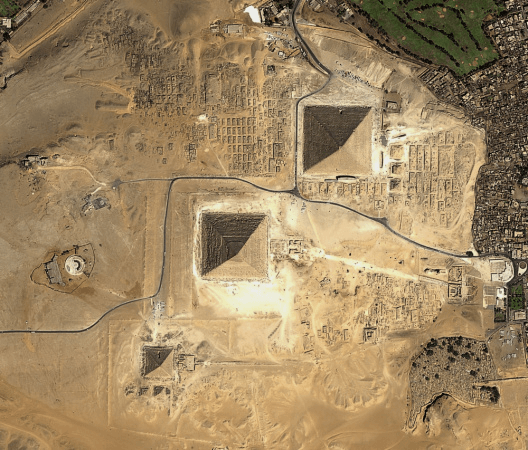
Space travel may still have a long way to go, but the notion of archaeological research and heritage management in space is already concerning scientists and environmentalists.
- In 1993, University of Hawaii’s anthropologist Ben Finney, who for much of his career has studied the technology once used by Polynesians to colonize islands in the Pacific, suggested that it would not be premature to begin thinking about the archaeology of Russian and American aerospace sites on the Moon and Mars. Finney pointed out that just as today's scholars use archaeological records to investigate how Polynesians diverged culturally as they explored the Pacific, archaeologists will someday study off-Earth sites to trace the development of humans in space. He realized that it was unlikely anyone would be able to conduct fieldwork in the near future, but he was convinced that one-day such work would be done.
- There is a growing awareness, however, that it won’t be long before both corporate adventurers and space tourists reach the Moon and Mars. There is a wealth of important archaeological sites from the history of space exploration on the Moon and Mars and measures need to be taken to protect these sites. In addition to the threat from profit-seeking corporations, scholars cite other potentially destructive forces such as souvenir hunting and unmonitored scientific sampling, as has already occurred in explorations of remote polar regions. Already in 1999 one company was proposing a robotic lunar rover mission beginning at the site of Tranquility Base and rumbling across the Moon from one archaeological site to another, from the wreck of the Ranger S probe to Apollo 17 s landing site. The mission, which would leave vehicle tire- marks all over some of the most famous sites on the Moon, was promoted as a form of theme-park entertainment.
- According to the vaguely worded United Motions Outer Space Treaty of 1967. what it terms ‘space junk’ remains the property of the country that sent the craft or probe into space. But the treaty doesn’t explicitly address the protection of sites like Tranquility Base, and equating the remains of human exploration of the heavens with ‘space junk’ leaves them vulnerable to scavengers. Another problem arises through other international treaties proclaiming that land in space cannot be owned by any country or individual. This presents some interesting dilemmas for the aspiring manager of extraterrestrial cultural resources. Does the US own Neil Armstrong's famous first footprints on the Moon but not the lunar dust in which they were recorded? Surely those footprints are as important in the story of human development as those left by hominids at Laetoli, Tanzania. But unlike the Laetoli prints, which have survived for 3.5 million years encased in cement-like ash. those at Tranquility Base could be swept away with a casual brush of a space tourist’s hand. To deal with problems like these, it may be time to look to innovative international administrative structures for the preservation of historic remains on the new frontier.
- The Moon, with its wealth of sites, will surely be the first destination for archaeologists trained to work in space. But any young scholars hoping to claim the mantle of history’s first lunar archaeologist will be disappointed. That distinction is already taken.
- On November 19. 1969. astronauts Charles Conrad and Alan Bean made a difficult manual landing of the Apollo 12 lunar module in the Moon’s Ocean of Storms, just a few hundred feet from an unmanned probe. Surveyor J. had landed in a crater on April 19. 1967. Unrecognized at the time, this was an important moment in the history of science. Bean and Conrad were about to conduct the first archaeological studies on the Moon.
- After the obligatory planting of the American flag and some geological sampling, Conrad and Bean made their way to Surveyor 3. They observed that the probe had bounced after touchdown and carefully photographed the impressions made by its footpads. The whole spacecraft was covered in dust, perhaps kicked up by the landing.
- The astronaut-archaeologists carefully removed the probes television camera, and remote sampling arm. and pieces of tubing. They bagged and labeled these artifacts, and stowed them on board their lunar module. On their return to Earth, they passed them on to the Daveson Space Center in Houston, Texas, and the Hughes Air and Space Corporation in EI Segundo, California. There, scientists analyzed the changes in these aerospace artifacts.
- One result of the analysis astonished them. A fragment of the television camera revealed evidence of the bacteria Streptococcus mitis. In a moment it was thought Conrad and Bean had discovered evidence for life on the Moon, but after further research the real explanation became apparent. While the camera was being installed in the probe prior to the launch, someone sneezed on it. The resulting bacteria had traveled to the Moon, remained in alternating freezing.' boiling vacuum for more than two years, and returned promptly to life upon reaching the safety of a laboratory back on Earth.
- The finding that not even the vastness of space can stop humans from spreading a sore throat was an unexpected spin-off. But the artifacts brought back by Rean and Conrad have a broader significance. Simple as they may seem, they provide the first example of extraterrestrial archaeology and are perhaps more significant for the history of the discipline of formational archaeology, the study of environmental and cultural forces upon the life history of human artifacts in space.
Questions 1-6
Complete each sentence with the correct ending A-H from the box below.
Write the correct letter A-H in boxes 1-6 on your answer sheet.
- Ben Finney's main academic work investigates the way that - ____
- Ben Finney thought that in the long term - ____
- Commercial pressures mean that in the immediate future - ____
- Academics are concerned by the fact that in isolated regions on Earth. - ____
- One problem with the 1967 UN treaty is that - ____
- The wording of legal agreements over ownership of land in space means that - ____
|
Matching Sentence Endings Practice Exercise 5
Answer questions 1-5 which are based on the reading passage below.
History of Refrigeration Reading Answers
A. Refrigeration is a process of removing heat, which means cooling an area or a substance below the environmental temperature. Mechanical refrigeration makes use of (the evaporation of a liquid refrigerant, which goes through a cycle so that it can be reused. The main cycles include vapor compression, absorption steam-jet or steam-ejector, and airing. The term ‘refrigerator’ was first introduced by Maryland farmer Thomas Moore in 1803, but it is in the 20th century that the appliance we know today first appeared.
B. People used to find various ways to preserve their food before the advent of mechanical refrigeration systems. Some preferred using cooling systems of ice or snow, which meant that diets would have consisted of very little fresh food or fruits and vegetables, but mostly of bread, cheese, and salted meals. For milk and cheeses, it was very difficult to keep them fresh, so such foods were usually stored in a cellar or window box. In spite of those measures, they could not survive rapid spoilage. Later on, people discovered that adding such chemicals as sodium nitrate or potassium nitrate to water could lead to a lower temperature. In 1550 when this technique was first recorded, people used it to cool wine, as was the term ‘to refrigerate’. Cooling drinks grew very popular in Europe by 1600, particularly in Spain, France, and Italy. Instead of cooling water at night, people used a new technique: rotating long-necked bottles of water which held dissolved saltpeter. The solution was intended to create very low temperatures and even to make ice. By the end of the 17th century, iced drinks including frozen juices and liquors had become extremely fashionable in France.
C. People’s demand for ice soon became strong. Consumers’ soaring requirement for fresh food, especially for green vegetables, resulted in reform in people’s dieting habits between 1830 and the American Civil War, accelerated by a drastic expansion of the urban areas arid the rapid amelioration in the economy of the populace. With the growth of cities and towns, the distance between the consumer and the source of food was enlarged. In the 1799s as a commercial product, ice was first transported out of Canal Street in New York City to Charleston, South Carolina. Unfortunately, this transportation was not successful because when the ship reached its destination, little ice was left. Frederick Tudor and Nathaniel Wyeth, two New England businessmen, grasped the great potential opportunities for the ice business and managed to improve the storage method of ice in the process of shipment. The acknowledged ‘Ice King’ at that time, Tudor concentrated his efforts on bringing the ice to the tropics1 areas. In order to achieve his goal and guarantee the ice arrived at the destination safely he tried many insulating materials in an experiment and successfully constructed the ice containers, which reduce the ice loss from 66 percent to less than 8 percent drastically. Wyeth invented an economical and speedy method to cut the ice into uniform blocks, which had a tremendously positive influence on the ice industry. Also, he improved the processing techniques for storing, transporting, and distributing ice with less waste.
D. When people realized that the ice transported from the distance was not as clean as previously thought and gradually caused many health problems, it was more demanding to seek clean natural sources of ice. To make it worse, by the 1890s water pollution and sewage dumping made clean ice even more unavailable. The adverse effect first appeared in the blowing industry, and then seriously spread to such sectors as meat packing and dairy industries. As a result, clean, mechanical refrigeration was considered in need.
E. Many inventors with creative ideas took part in the process of inventing refrigeration, and each version was built on previous discoveries. Dr. William Cullen initiated to study of the evaporation of liquid under vacuum conditions in 1720. He soon invented the first man-made refrigerator at the University of Glasgow in 1748 with the employment of ethyl ether boiling into a partial vacuum. American inventor Oliver Evans designed the refrigerator firstly using vapor rather than liquid in 1805. Although his conception was not put into practice in the end the mechanism was adopted by an American physician John Gorrie, who made one cooling machine similar to Evans’ in 1842 with the purpose of reducing the temperature of the patient with yellow fever in a Florida hospital. In 1851, Evans obtained the first patent for mechanical refrigeration in the USA. In 1820, Michael Faraday, a Londoner, first liquefied ammonia to cause cooling. In 1859, Ferdinand Carre from France invented the first version of the ammonia water-cooling machine. In 1873, Carl von Linde designed the first practical and portable compressor refrigerator in Munich, and in 1876 he abandoned the methyl ether system and began using the ammonia cycle. Linde later created a new method (‘Linde technique’) for liquefying large amounts of air in 1894. Nearly a decade later, this mechanical refrigerating method was adopted subsequently by the meat packing industry in Chicago.
F. Since 1840, cars with refrigerating systems had been utilized to deliver and distribute milk and butter. Until 1860, most seafood and dairy products were transported with cold-chain logistics. In 1867, refrigerated, railroad cars are patented to J.B, Sutherland from Detroit, Michigan, who invented insulated cars by installing ice bunkers at the end of the cars: air came in from the top, passed through the bunkers, circulated through the cars by gravity and controlled by different quantities of hanging flaps which caused different air temperatures. Depending on the cargo (such as meat, fruits, etc.) transported by the cars, different car designs came into existence. In 1867, the first refrigerated car to carry fresh fruit was manufactured by Parker Earle of Illinois, who shipped strawberries on the Illinois Central Railroad. Each chest was freighted with 100 pounds of ice and 200 quarts of strawberries. In 1949, the trucking industry began to be equipped with a refrigeration system with a roof-mounted cooling device, invented by Fred Jones.
G. From the late 1800s to 1929, refrigerators employed toxic gases – methyl chloride, ammonia, and sulfur dioxide – as refrigerants. But in the 1920s, a great number of lethal accidents took place due to the leakage of methyl chloride out of refrigerators. Therefore, some American companies started to seek some secure methods of refrigeration. Frigidaire detected a new class of synthetic, refrigerants called halocarbons or CFCs (chlorofluorocarbons) in 1928. this research led to the discovery of chlorofluorocarbons (Freon), which quickly became the prevailing material in compressor refrigerators. Freon was safer for the people in the vicinity, but in 1973 it was discovered to have detrimental effects on the ozone layer. After that, new improvements were made, and Hydrofluorocarbons, with no known harmful effects, were used in the cooling system. Simultaneously, nowadays, Chlorofluorocarbons (CFS) are no longer used; they are announced illegal in several places, making refrigeration far safer than before.
Questions 1-4
Complete each sentence with the correct ending, A-E, below.
Write the correct letter, A-E, in boxes 1-4 on your answer sheet.
1. A healthy dietary change between 1830 and the American Civil War was greatly associated with - ____
2. The development of urbanization was likely to cause - ____
3. Problems due to water treatment contributed to - ____
4. The risk of environmental devastation from refrigeration led to - ____
A. new developments, such as the application of Hydrofluorocarbons.
B. consumers ’ demand for fresh food, especially vegetables.
C. the discovery of chlorofluorocarbons (Freon).
D. regional transportation system for refrigeration for a long distance.
E. the extensive spread of the refrigeration method.
Matching Sentence Endings Practice Exercise 6
Answer questions 1-5 which are based on the reading passage below.
The Container Trade Reading Answers
- The shipping container is one of the mainstays of international trade. The globalised modern economy depends on the rapid and efficient movement of goods that containerisation allows. In many ways it was the advent of the container that allowed this globalised economy to develop.
- Invented during World War two as an efficient method of moving equipment to the front lines, there are now at any one time up to 15 million containers being used to transport goods on land and sea or waiting to be filled at factories and ports. They are vital in the supply chain and have allowed the added efficiency of "just in time" inventory management, where companies no longer keep large warehouses of stock or parts, but rely on the ability to quickly order what they want from their suppliers. It is estimated that since the 1980s the ratio of inventory to GDP in American business' has fallen from 25% to 15%. Altogether total business inventory in the US is estimated at $1.5 trillion, without "just in time" management methods this might be as much as $2.5 trillion.
- This means that companies rely more and more on the prompt delivery of parts from their suppliers to fulfill orders. This is particularly true of industries such as computer manufacture, which no longer make all the parts of the products that bear their names, but instead out source, often to suppliers half way around the world. American computer manufacturers are, for example, increasingly dependent on Asian microchip manufacturers in countries such as Taiwan and Thailand. An example of the kind of problems any disruption to the supply chain causes came after the September 11 attacks in the US when the Canadian border was shut for just two days causing chaos in the Detroit car industry, which relies on a regular flow of parts from Canada.
- There are three main flows of sea borne cargo: trans-Pacific, trans-Atlantic and Europe-Far East. The trans-Pacific route is by far the largest flow. At 11 million TEU ("twenty foot equivalent units") a year, it is almost twice the volume of Europe-Far East trade and three times the size of trans-Atlantic traffic. During the 1990s, during America's boom years, the trade of all the routes grew enormously and this led to more and larger ships being built. The container fleet grew by 12% in 2001. Until then, a container ship commonly carried 600 TEU, during the 1990s ships were being build that could carry up to 8000 TEU. However after the 1990s there was a dramatic fall off in trade. Trans-Pacific trade, for example, fell to 50% of its 1990s high.
- This down turn is being handled by the shipping alliances which manage the global trade. These large organizations are responsible for maintaining the fleets and seeing that the flow of goods is uninterrupted. This is a job that governments feel that the regular and reliable flow of trade is so important that in many cases the shipping alliances are exempt from anti-trust and monopoly laws. Their response has been to cut services, rest some of the older ships and share the burden amongst themselves.
At first, containers reduced theft as it was more difficult for casual thieves to get into the containers. However, criminal gangs soon saw the potential for taking whole containers. This became a profitable crime as the average value of a container grew to $500,000 by the 1980s. Criminals also benefited from the convenience of containers when using them to transport drugs, illegal immigrants or other illegal goods. Measures to combat this, including stronger locks and preference schemes for shippers who have anti-theft programmes, have had some success, but crime is a constant menace to the container trade. - Increasingly, the huge number of containers and their self-contained and enclosed nature has been raising worries about their possible use by terrorists. In fact, possible terrorists have already been found hiding in containers. This is particularly worrying considering that only 2% of containers are inspected. Containers are also extremely difficult to track and monitor. This is because they pass through so many countries and jurisdictions and because they can travel on both land and sea. Each transaction involving a container can involve as many as 25 different parties and generate between 30 and 40 documents. For a ship carrying 600 TEU this would result in approximately 4000 documents. The sheer scale of the information involved makes tracking containers a daunting task. Screening them to determine the contents is another solution that would take a great deal of effort because of the large numbers of containers. Additionally, it might cause delays in delivery that would disrupt international trade and industry out of proportion to the good the searches do.
- For the foreseeable future, there would seem to be no alternative to containers and their use is bound to grow. They are one of the cornerstones of global trade, but many yet cause problems their inventors never envisaged.
Questions 1 and 2
Choose the best TWO alternatives to complete the sentences. Write them in the box.
Choose TWO lettersA – E.
The invention of containers…
A resulted from the efficient movement of goods.
B led to more global trade.
C was initially for military purposes.
D came just in time for many managers.
E relied on the ability to receive orders quickly.
Questions 3 and 4
Choose TWO letters A – E.
Containers are important because they…
A prevent the need for companies to hold large amounts of stock.
B increase the amount of business inventory.
C make trade between countries on different sides of the world easier.
D regularly supply manufactures in Canada.
E reduce the amount of out sourcing needed by companies.
Questions 5 and 6
Choose TWO letters A – E.
The Trans-Pacific trade route…
A has nearly double the amount of trade as that of the Europe-Far East trade route.
B had its container fleet increase by 12%.
C sparked the boom years of the 1990s.
D usually carried around 600 TEU.
E has witnessed a substantial decrease in container trade.
Matching Sentence Endings Practice Exercise 7
Answer questions 1-4 which are based on the reading passage below.
1. Computerized data storage and electronic mail were to have heralded the paperless office. But, contrary to expectation, paper consumption throughout the world shows no sign of abating. In fact, consumption, especially of printing and writing papers, continues to increase. World demand for paper and board is now expected to grow faster than the general economic growth in the next 15 years. Strong demand will be underprinted by the growing industrialization of South East Asia, the reemergence of paper packaging, greater use of facsimile machines and photocopiers, and the popularity of direct -mail advertising. It is possible that by 2007, world paper and board demand will reach 455 million tonnes, compared with 241 million tonnes in 1991.
2. The pulp and paper industry has not been badly affected by the electronic technologies that promised a paperless society. But what has radically altered the industry’s structure is pressure from another front-a more environmentally conscious society driving an irreversible move towards cleaner industrial production. The environmental consequences of antiquated pulp mill practices and technologies had marked this industry as one in need of reform. Graphic descriptions of deformed fish and thinning populations, particularly in the Baltic Sea where old pulp mills had discharged untreated effluents for 100 years, have disturbed the international community.
3. Until the 1950s, it was common for pulp mills and other industries to discharge untreated effluent into rivers and seas. The environmental effects were at the time either not understood, or regarded as an acceptable cost of economic prosperity in an increasingly import-oriented world economy. But greater environmental awareness has spurred a fundamental change in attitude in the community, in government and in industry itself.
4. Since the early 1980s, most of the world-scale pulp mills in Scandinavia and North America have modernized their operations, outlying substantial amounts to improve production methods. Changes in mill design and processes have been aimed at minimizing the environmental effects of effluent discharge while at the same time producing pulp with the whiteness and strength demanded by the international market. The environmental impetus is taking this industry even further, with the focus now on developing processes that may even eliminate waste-water discharges. But the ghost of the old mills continues to haunt industry today. In Europe, companies face a flood of environment-related legislation. In Germany, companies are now being held responsible for the waste they create.
5. Pulp is the porridge -like mass of plant fibers from which paper is made. Paper makers choose the type of plant fibre and the processing methods, depending on what the end product will be used for: whether it is a sturdy packing box, a smooth sheet of writing paper or a fragile tissue. In wood, which is the source of about 90% of the world’s paper production, fibres are bound together by lignin, which gives the unbleached pulp a brown colour. Pulping can be done by mechanical grinding, or by chemical treatment in which woodchips are “cooked” with chemicals, or by a combination of both methods.
6. Kraft pulping is the most widely used chemical process for producing pulp with the strength required by the high-quality paper market. It is now usually carried out in a continuous process in a large vessel called digester. Woodchips are fed from a pile into the top of the digester. In the digester, the chips are cooked in a solution called white liquor, nosed of caustic soda (sodium hydroxide) sodium sulphide. The chips are cooked at high temperatures of up to 170 degree for up to three hours. The pulp is then washed and rate from the spent cooking liquor which has turned dark and is now appropriately ailed black liquor. An important feature of kraft pulping is a chemical recovery system which recycles about 95 % of the cooking chemicals and produces more than enough energy runs the mill. In a series of steps involving a furnace and tanks, some of the black liquor is transformed into energy, while some is regenerated into the original white cooking liquor. The pulp that comes out has little lignin left in the fibres. Bleaching removes the last remaining lignin and brightens the pulp. Most modern mills have modified their pulping process to remove as much of the lignin as possible before the pulp moves to the bleaching stage.
Questions 1-4
Look at the following list of factors A-F, which will influence the amount of paper being used in the future.
Choose FOUR factors which are mentioned in Paragraph 1 of the Reading Passage 3.
Write the correct answers A-C in boxes 1-4 on your Answer Sheet
List of factors
A. more people read newspapers
B. increased use of paper bags
C. increased boob production for education
D. wider use of sign post advertising
E. increased use of fax machines
F. wider use of leaflet advertising
G. greater use of duplicating machines
Answers for Practice exercises
Here you will find the answers for practice exercises 1,2,3,4,5,6 and 7.
The Penny Black Reading Answers
(Note: The text in italics is from the reading passage and shows the location from where the answer is taken or inferred. The text in regular font explains the answer in detail.)
1. C
Explanation: Paragraph 3 -There were moves for postal reform for many years, until eventually, these moves started gathering some force … Some basic elements of the plan were the lowering of postage rates for basic letters to one penny, the removal of certain idiosyncrasies, that prepayment would become normal. The word ‘prepayment’ implies that postage was paid by the sender
2. B
Explanation: Paragraph 6 - The stamps were printed in sheets of 240, engraved on steel plates,
3. F
Explanation: Paragraph 7 - Every penny black stamp has letters in the lower two corners.
4. A
Explanation: Paragraph 8 - … as it should be remembered that in 1840 the use of envelopes was unusual, …
5. D
Explanation: Paragraph 9 - The stamps were not perforated and had to be separated using scissors or a knife. As there was only about 1mm between one stamp and another, it was very easy to stray just a little and cut into the printed design of the stamp.
Music Piracy Reading Answers
(Note: The text in italics is from the reading passage and shows the location from where the answer is taken or inferred. The text in the regular font explains the answer in detail.)
1 C
Explanation: Paragraph 1- In 1999, a nineteen-year-old student decided he wanted a fast and efficient way to share his favourite songs with his friends. But, he didn’t just want to make compilation tapes on cassettes. He wanted to do the sharing via the computer. The result was Napster.
2 G
Explanation: Paragraph 3 - Figures have shown repeatedly that the rise of Napster and its ilk had actually caused a resurgence in lacklustre CD sales.
3 D
Explanation: Paragraph 3 - Many users download lots of tracks but then buy the complete album on CD for the sake of having something more tangible to own.
4 E
Explanation: Paragraph 4 - ... the record industry began to fight this cultural sea change. Napster was shut down under court order, and many of the other early P2P systems followed.
5 A
Explanation: Paragraph 5- … Apple Corp and a Russian site going by the name of Allofmp3.com,... had latched on to the fact that mp3 downloads, despite the fears of the wider industry, would be the way forward.
Commercial Dog Breeding Reading Answers
(Note: The text in italics is from the reading passage and shows the location from where the answer is taken or inferred. The text in the regular font explains the answer in detail.)
1 C
Explanation: Paragraph 2 - One major worrying factor is the practice of breeding for the sake of appearance … and it is the animal which suffers due to genetic exploitation.
2 F
Explanation: Paragraph 2 - Another cause of concern is inbreeding, which is the cause of life-threatening genetic defects that can be excruciatingly painful.
3 D
Explanation: Paragraph 3 - Also, the ‘puppy-mill’ kennels function in abysmal conditions. They generally consist of small cages constructed from wire mesh and wood … Once they are incapable of breeding, they are either put to death or abandoned ... female dogs and their pups suffer from exposure, and malnutrition and have next to no medical care.
4 E
Explanation: Paragraph 4 - UK’s biggest dog welfare charity, Dogs Trust, recently released a report that is the result of six months of investigation ... Shocking footage of this investigation shows how commercial breeders, transporters and even vets in Hungary and Lithuania are abusing the EU legislation by using the Pet Travel Scheme (PETS) for the commercial importation of puppies to Great Britain.
5 H
Explanation: Paragraph 5 - Where pet owners are concerned, a rather disturbing trend has picked up in the past few decades. They buy puppies of Bulldogs and other high-priced pedigree animals, mainly as a novelty and status symbol.
6 B
Explanation: Paragraph 6 - In countries like India, ... Alarmingly, there is a rising demand for Saint Bernards and Siberian Huskies. These animals that are meant to live in cold climates are trapped inside apartments that are small, hot and humid. Serious health problems are seen to be increasing in these animals.
Space: the Final Archaeological Frontier Reading Answers
(Note: The text in italics is from the reading passage and shows the location from where the answer is taken or inferred. The text in the regular font explains the answer in detail.)
1. Answer: E
Explanation: 1st line of paragraph A tells that In 1993, University of Hawaii’s anthropologist Ben Finney, who for much of his career has studied the technology once used by Polynesians to colonize islands in the Pacific, suggested that it would not be premature to begin thinking about the archaeology of Russian and American aerospace sites on the Moon and Mars.
2. Answer: B
Explanation: 2nd line of paragraph A mentions that Finney pointed out that just as today's scholars use archaeological records to investigate how Polynesians diverged culturally as they explored the Pacific, archaeologists will someday study off-Earth sites to trace the development of humans in space.
3. Answer: H
Explanation: 1st line of paragraph B depicts that There is a growing awareness, however, that it won’t be long before both corporate adventurers and space tourists reach the Moon and Mars.
4. Answer: A
Explanation: 3rd line of paragraph B cites that In addition to the threat from profit-seeking corporations, scholars cite other potentially destructive forces such as souvenir hunting and unmonitored scientific sampling, as has already occurred in explorations of remote polar regions.
5. Answer: F
Explanation: 3rd line of paragraph C justifies that But the treaty doesn’t explicitly address the protection of sites like Tranquility Base, and equating the remains of human exploration of the heavens with ‘space junk’ leaves them vulnerable to scavengers.
6. Answer: D
Explanation: 6th line of paragraph C narrates that Does the US own Neil Armstrong's famous first footprints on the Moon but not the lunar dust in which they were recorded?
History of Refrigeration Reading Answers
(Note: The text in italics is from the reading passage and shows the location from where the answer is taken or inferred. The text in the regular font explains the answer in detail.)
11. Answer: B
Explanation: 2nd line of paragraph C proves that Consumers’ soaring requirement for fresh food, especially for green vegetables, resulted in reform in people’s dieting habits between 1830 and the American Civil War, accelerated by a drastic expansion of the urban areas amid the rapid amelioration in an economy of the populace. In light of the fact that the demand for fresh food, especially vegetables, increased between 1830 and the American Civil War, and resulted in healthy changes in diet, the answer is B (consumers’ demand for fresh food, especially for vegetables).
12. Answer: D
Explanation: 3rd and 4th lines of paragraph C represents that With the growth of the cities and towns, the distance between the consumer and the source of food was enlarged. In the 1799s as a commercial product, ice was first transported out of Canal Street in New York City to Charleston, South Carolina. From the above lines, it is evident that as the cities and towns grew (urbanization), a regional transportation system for refrigeration for a long distance was developed to reduce the distance between the consumer and the source of food. Hence, the answer is D (regional transportation system for refrigeration for a long distance).
13. Answer: E
Explanation: 2nd,3rd, and 4th lines of paragraph D report that To make it worse, by the 1890s water pollution and sewage dumping made clean ice even more unavailable. The adverse effect first appeared in the blowing industry, and then seriously spread to such sectors as meat packing and dairy industries. As a result, clean, mechanical refrigeration was considered in need. This points to the fact that water pollution and other water-related problems led to the spread of refrigeration methods. Hence, the answer is E (extensive spread of the refrigeration method).
14. Answer: A
Explanation: 6th and 7th line of paragraph G tells that Freon was safer for the people in the vicinity, but in 1973 it was discovered to have detrimental effects on the ozone layer. After that, new improvements were made, and Hydrofluorocarbons, with no known harmful effects, were used in the cooling system. It is to be noted that as it was found out that the use of Freon is affecting the environment negatively, the application of Hydrofluorocarbons began as it had no known side effects. Hence, the answer is A (new developments, such as the application of Hydrofluorocarbons).
The Container Trade Reading Answers
(Note: The text in italics is from the reading passage and shows the location from where the answer is taken or inferred. The text in the regular font explains the answer in detail.)
1. Answer: B
Explanation: The globalized modern economy depends on the rapid and efficient movement of goods that containerisation allows. In many ways it was the advent of the container that allowed this globalized economy to develop. The given answer is located in the 2-5 lines of paragraph 1.
2. Answer: C
Explanation: Invented during World War two as an efficient method of moving equipment to the front lines, there are now at any one time up to 15 million containers being used to transport goods on land and sea or waiting to be filled at factories and ports. The given answer is located in the 1-4 lines of paragraph 2.
3. Answer: A
Explanation: companies no longer keep large warehouses of stock or parts. The given answer is located in the 5-6 lines of paragraph 2
4. Answer: C
Explanation: This means that companies rely more and more on the prompt delivery of parts from their suppliers to fulfill orders. This is particularly true of industries such as computer manufacture, which no longer make all the parts of the products that bear their names, but instead out source, often to suppliers half way around the world. The given answer is located in the 1-6 lines of paragraph 3.
5. Answer: A
Explanation: At 11 million TEU…a year, it is almost twice the volume of Europe-Far East trade and three times the size of trans-Atlantic traffic. The given answer is located in the 3-5 lines of paragraph 4.
6. Answer: E
Explanation: However after the 1990s there was a dramatic fall off in trade. Trans-Pacific trade, for example, fell to 50% of its 1990s high. The given answer is located in the last 3 lines of paragraph 4.
New Rules for the Paper Game Reading Answers
(Note: The text in italics is from the reading passage and shows the location from where the answer is taken or inferred. The text in the regular font explains the answer in detail.)
1. Answer: B, E, F, G
2. Answer: B, E, F, G
3. Answer: B, E, F, G
4. Answer: B, E, F, G
Also check IELTS academic reading matching features
Conclusion
We believe that you've got the useful tips, strategies and exercises to practice in this article that will help you to skill Build well in the IELTS academic reading matching sentence endings test with mock test and will be more useful to achieve an 8+ band score in IELTS academic reading task.
Free Online Mock Test 2026
Practice our mock test worth Rs. 25000 for Free and know your IELTS score!








Global Headquarters
Kanan Int EdTech Inc
320 Bay Street, Suite 321 (Spaces), Toronto ON, Canada M5B 1N9
Indian Headquarters
Kanan International Pvt. Ltd.
D-wing, 2nd Floor, Trident Complex, Ellora Park Vadiwadi Road, Vadodara, Gujarat 390007
IT/ Digital Campus
Kanan International Pvt. Ltd
Old, New No 3, 2nd Floor, 1A, Dr Sadasivam Rd, T. Nagar, Chennai, Tamil Nadu 600017
Our branches
- Bardoli
- Bharuch
- Chennai
- Dehradun
- Gurugram
- Himatnagar
- Karnal
- Nadiad
- Navsari
- Palanpur
- Rajkot
- Vadodara
- Valsad
- Vallabh Vidyanagar
- Vapi
Study Abroad
Test Prep
Top Universities
Consultants
IELTS Centers
GRE Centers
TOEFL Centers
SAT Centers
Language Courses in Vadodara
Study Abroad Calculators
Featured Blogs
Study Abroad Consultants in Chennai
Study Abroad Consultants in Surat
Study Abroad Consultants in Navsari
Study Abroad Consultants in Bardoli
Study Abroad Consultants in Ahmedabad
Study Abroad Consultants in Anand
Study Abroad Consultants in Khanna
Study Abroad Consultants in Nadiad
Study Abroad Consultants in Vadodara
Study abroad consultants in Valsad
Copyright © 2026 KANAN.CO All rights reserved.