- Study Abroad
- / ielts
- / continents collide reading answers
Continents collide Reading Answers


Author
19-09-2025

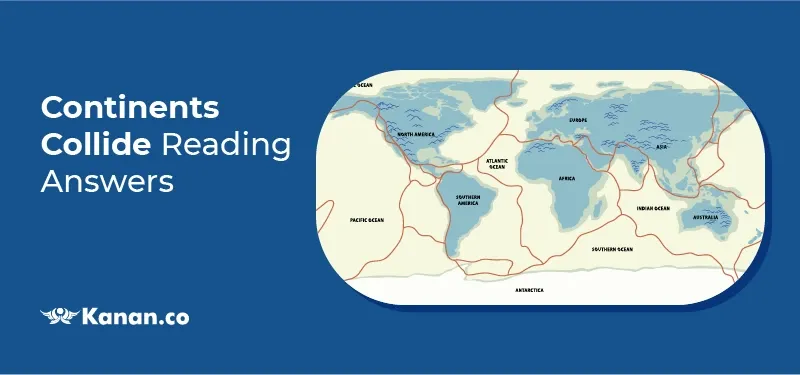
Continents collide reading practice test contains 14 questions that cover different types of questions. It not only provides answers but also gives explanations and tells you where to find the information in the passage. This reading practice will enhance your reading and problem-solving skills.
Given question types are, Sentence Completion, Multiple Choice Questions, Diagram Completion Questions, and Table Completion.
Table of contents:
- Solution for Continents collide
- Continents collide IELTS reading practice Test
- Passage
- Questions
- Answers with Explanations
Solution for Continents collide
To improve your ability to solve problems, it's a good idea to compare your answers with the Continents Collide Reading Answers. This will help you recognize any errors or mistakes you may have made and learn from them.
Answer Table
| 27. laurasia | 31. B | 35. rotation | 39. Subduction (zone) |
| 28. pangaea | 32. D | 36. San Andreas Fault | 40. mighty rivers |
| 29. C | 33. tectonic plates | 37. Divergent (boundary) | |
| 30. B | 34. cools | 38. Continental collision |

Continents collide IELTS Reading Practice Test - Exam Review
Check out our YouTube Channel to Practice Full-Length IELTS Reading Tests Daily

The answers provided for the IELTS reading questions on the topic Continents collide are helpful for improving your skills. To effectively solve Matching the Headings questions, it's best to read the entire passage first, so you understand the main ideas in each paragraph. Then, focus on reading a few sentences to find the right heading. For Sentence Completion, pay attention to keywords and the meaning of sentences. For Multiple Choice Questions, eliminate technique, and for diagram and table completion use keywords and refer back to the passage. With regular practice and dedication, you can reach your target band score.
Passage
The reading passage of Continents collide is provided here. Read the whole passage and respond to the questions carefully, and check your responses with Continents collide answers with location.
Continents collide
The idea that the continents are moving was first proposed by a German meteorologist, Alfred Wegener, in a book published in 1915. He had gathered a great deal of careful and tantalising evidence, the most obvious being the simple observation that the great landmasses of the world seem to fit together, jigsaw-like, a striking example being the coastlines of either side of the Atlantic Ocean. Wegener was even able to theorise, correctly, that all the continents were once assembled into a supercontinent (now called Pangaea). Pangaea broke up into Laurasia (which became North America and Eurasia) and Gondwana (which became the remaining continents).
Unfortunately, Wegener could propose no propulsive force for this movement, apart from the vague and erroneous suggestion that it might be centrifugal forces. He also severely overestimated the speed of this motion. These problems, and the fact that he was a meteorologist (rather than a geologist), meant that, upon publishing his ideas, the scientific community was resolutely and implacably hostile. It is an interesting example of that not uncommon instance in which a scientist who was fundamentally correct was denied any recognition in his lifetime. Semmelweis, who advocated the washing of hands before surgery as a way to reduce hospital fatalities, is another example. Wegener was to unexpectedly die on an expedition in Greenland, probably of a heart attack — in his death, as in his life, left out in the cold.
The first hints of the existence of Gondwana came from the similarity of fossil plants and animals distributed in the same geological period over South America, Africa, Antarctica, India, and Australia. Similarly, the composition and nature of the rocks along relevant coastlines spoke the same story, yet to become scientifically credible, the theory needed evidence of a propulsive force to move such huge continents (in the same way that Semmelweis’s ideas needed the germ theory of disease). It was only in the 1960s, decades after Wegener’s death, that hard evidence for his theory began amassing to eventually become overwhelming.
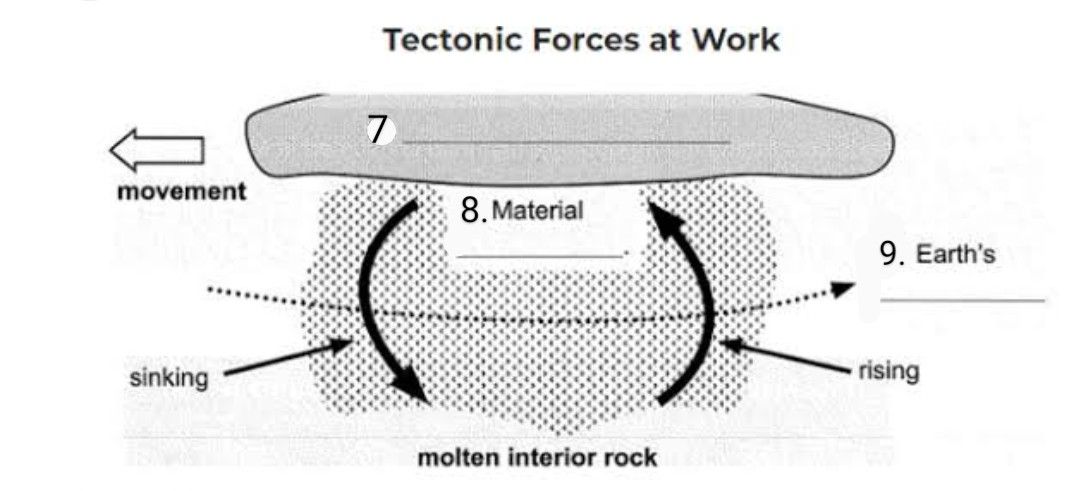
The theory is now called ‘plate tectonics’, since it was proven that the Earth’s surface is fractured into plates. These bump and grind as they steadily move at infinitesimally slow rates in given directions, driven by ‘convention forces. These are formed by the vast circular rising of superheated rock from the planet’s molten interior. This material cools as it nears the surface, eventually sinking once again towards the centre. Add to this the rotation of the Earth itself, and there is a complicated and barely understood set of cyclic swirls of molten rock, producing drags and pulls on each tectonic plate, the sum of which results in a steady migration.
Of course, this motion is slow, typically at the speed at which fingernails grow, and at its fastest, the rate at which hair does. But by being consistent and essentially unstoppable, the results can be spectacular, particularly when plates meet. Here, the release of heat, as well as the buckling and melting which results, gives rise to geological events such as earthquakes, and geological features such as mountains, volcanoes, and oceanic ridges and trenches. Plate boundaries see most of the world’s active volcanoes, with the Pacific Plate’s ‘Ring of Fire’ being a good example. Volcanism may sometimes occur in the middle of plates, but this has been theorised to be a result of ‘hotspots’: anomalously hot areas of interior rock which melt through the plate, forcing an escape to the surface.
Plate boundaries come in three types. First, transform boundaries, where the plates grind past each other. It was once thought that the well-known Aegir Ridge was an example, until studies showed that it had never been active, whereas the periodic earthquakes along California’s San Andreas Fault show the very opposite case. The second type is Divergent boundaries, where the two plates slide apart from each other. Mid-oceanic ridges, such as in the Atlantic, and active rift zones, such as in East Africa, are examples. Finally, there are Convergent boundaries, where the two plates slide towards each other. This can form either a subduction zone (if one plate moves underneath the other) or a continental collision. Deep marine trenches are formed in the former case, and with the descending plate releasing its trapped water on being heated in the Earth’s interior, huge amounts of heat and pressure rise to the surface, causing mountains and volcanoes to form, such as in the Andes mountain range.
The best example of a continental collision is the Indian plate, which is steadily and implacably migrating straight into central Asia. The Himalayas of Nepal and Northern India, the Karakoram Ranges of Northern Pakistan, and the highlands of Afghanistan, are all part of the complex fold system that resulted, producing some of the highest peaks in the world. There are also some deep valleys receiving the run-off melt-water from the far side of these mountains, creating some mighty rivers, such as the Indus, the Irrawaddy, and the Mekong. Interestingly, the Himalayas are still growing, meaning that the summit of Mount Everest is perhaps a couple of metres higher now than when people first stood there in 1953, presumably making it just that little bit harder to reach. are still growing, meaning that the summit of Mount Everest is perhaps a couple of metres higher now than when people first stood there in 1953, presumably making it just that little bit harder to reach.
Questions
Questions 27-28
Complete the sentences.
Choose ONE WORD from the passage for each answer.
27. The combination of North America and Eurasia had the name __________
28. The combination of Laurasia and Gondwana had the name ___________
Questions 29-32
Choose the correct letter, A, B, C, or D.
29. Scientists disliked Wegener’s idea because he
- was German.
- made simple observations.
- was a meteorologist.
- made too many suggestions.
30. Both Wegener and Semmelweis
- died prematurely.
- lacked crucial evidence.
- were never given recognition.
- were German.
31. The motion of tectonic plates
- is faster than hair growth.
- does not change.
- is well understood.
- can start cyclic swirls.
32. Volcanoes are formed away from plate boundaries due to
- buckling and melting.
- oceanic effects.
- geological events.
- heated regions.
Questions 33-35
Complete the diagram.
Choose NO MORE THAN TWO WORDS from the passage for each answer.
Questions 36-40
Complete the table.
Choose NO MORE THAN THREE WORDS from the passage for each answer.
| Types of Boundary | Related Example |
| Transform | 36.________________ |
| 37._______________ | East Africa Rift |
| Convergent I: 38. ______________ | Central Asia ranges [resulting in tall mountains, deep valleys, and several 39. _____________ ] |
| Convergent II: 40. _____________ | Andes Mountain |
Answers For Continents collide Explanations
Continents collide reading answer with explanation will help you to get better at learning and solving problems. By understanding the right answers and explanations you can enhance your understanding and performance.
27. Answer: laurasia
Explanation: In the 1st Paragraph, the writers mentioned that, 'Pangaea broke up into Laurasia (which became North America and Eurasia) and Gondwana (which became the remaining continents).'
28. Answer: pangaea
Explanation: In the 1st Paragraph, the writers mentioned that, 'Pangaea broke up into Laurasia (which became North America and Eurasia) and Gondwana (which became the remaining continents).'
29. Answer: C
Explanation: In the 2nd Paragraph, the writers mentioned that, 'He also severely overestimated the speed of this motion. These problems, and the fact that he was a meteorologist (rather than a geologist), meant that, upon publishing his ideas, the scientific community was resolutely and implacably hostile.’
30. Answer: B
Explanation: In the 1st Paragraph, the writers mentioned that, 'Alfred Wegener, in a book published in 1915. He had gathered a great deal of careful and tantalising evidence, the most obvious being the simple observation that the great landmasses of the world seem to fit together, jigsaw-like, a striking example being the coastlines of either side of the Atlantic Ocean…Unfortunately, Wegener could propose no propulsive force for this movement, apart from the vague and erroneous suggestion that it might be centrifugal forces. He also severely overestimated the speed of this motion…’
31. Answer: B
Explanation: In the 5th Paragraph, the writers mentioned that, 'this motion is slow, typically at the speed at which fingernails grow, and at its fastest, the rate at which hair does. But by being consistent and essentially unstoppable, the results can be spectacular, particularly when plates meet.’
32. Answer: D
Explanation: In the 5th Paragraph, the writers mentioned that, 'Volcanism may sometimes occur in the middle of plates, but this has been theorised to be a result of ‘hotspots’: anomalously hot areas of interior rock which melt through the plate, forcing an escape to the surface.’
33. Answer: tectonic plates
Explanation: In the 4th Paragraph, the writers mentioned that, 'Add to this the rotation of the Earth itself, and there is a complicated and barely understood set of cyclic swirls of molten rock, producing drags and pulls on each tectonic plate, the sum of which results in a steady migration.’
34. Answer: cools
Explanation: In the 4th Paragraph, the writers mentioned that, 'This material cools as it nears the surface, eventually sinking once again towards the centre.’
35. Answer: rotation
Explanation: In the 4th Paragraph, the writers mentioned that, 'Add to this the rotation of the Earth itself, and there is a complicated and barely understood set of cyclic swirls of molten rock, producing drags and pulls on each tectonic plate, the sum of which results in a steady migration.’
36. Answer: San Andreas Fault
Explanation: In the 6th Paragraph, the writers mentioned that, 'It was once thought that the well-known Aegir Ridge was an example, until studies showed that it had never been active, whereas the periodic earthquakes along California’s San Andreas Fault show the very opposite case.’
37. Answer: Divergent (boundary)
Explanation: In the 6th Paragraph, the writers mentioned that, 'The second type is Divergent boundaries, where the two plates slide apart from each other.’
38. Answer: Continental collision
Explanation: In the 6th Paragraph, the writers mentioned that, 'This can form either a subduction zone (if one plate moves underneath the other) or a continental collision.’
39. Answer: Subduction (zone)
Explanation: In the 6th Paragraph, the writers mentioned that, 'This can form either a subduction zone (if one plate moves underneath the other) or a continental collision.’
40. Answer: mighty rivers
Explanation: In the 7th Paragraph, the writers mentioned that, 'There are also some deep valleys receiving the run-off melt-water from the far side of these mountains, creating some mighty rivers, such as the Indus, the Irrawaddy, and the Mekong.’
Other Reading Tests

About Author Gayathri Nagarajan
Gayathri, a trusted study-abroad expert, with expertise in standardized tests like IELTS, TOEFL, PTE, GRE, and GMAT. With a strong tech background from SASTRA University, she excels in software testing and has a passion for content writing and digital marketing. She aids students in finding the perfect academic fit, offering guidance on course selection, LOR and SOP writing. She remains up-to-date with the latest trends in higher education, delivering credible, accurate information on international education, including courses and test prep materials. As a trusted Study abroad expert at Kanan International, explore her latest blogs and articles for comprehensive insights into studying abroad and realizing your academic aspirations.
Kanan.co is a trusted study abroad consultancy offering comprehensive services, resources, and solutions for students and education institutions. We support students at every stage of their global education journey, ensuring a smooth and guided experience. Along with test preparation for IELTS, GRE, TOEFL, and SAT, we provide expert services such as SOP writing, visa guidance, accommodation support, scholarship assistance, and education loan support. Our expertise and commitment to excellence make us a reliable partner for students pursuing international education.
Free Online Mock Test 2026
Practice our mock test worth Rs. 25000 for Free and know your IELTS score!








Global Headquarters
Kanan Int EdTech Inc
320 Bay Street, Suite 321 (Spaces), Toronto ON, Canada M5B 1N9
Indian Headquarters
Kanan International Pvt. Ltd.
D-wing, 2nd Floor, Trident Complex, Ellora Park Vadiwadi Road, Vadodara, Gujarat 390007
IT/ Digital Campus
Kanan International Pvt. Ltd
Old, New No 3, 2nd Floor, 1A, Dr Sadasivam Rd, T. Nagar, Chennai, Tamil Nadu 600017
Our branches
- Bardoli
- Bharuch
- Chennai
- Dehradun
- Gurugram
- Himatnagar
- Karnal
- Nadiad
- Navsari
- Palanpur
- Rajkot
- Vadodara
- Valsad
- Vallabh Vidyanagar
- Vapi
Study Abroad
Test Prep
Top Universities
Consultants
IELTS Centers
GRE Centers
TOEFL Centers
SAT Centers
Language Courses in Vadodara
Study Abroad Calculators
Featured Blogs
Study Abroad Consultants in Chennai
Study Abroad Consultants in Surat
Study Abroad Consultants in Navsari
Study Abroad Consultants in Bardoli
Study Abroad Consultants in Ahmedabad
Study Abroad Consultants in Anand
Study Abroad Consultants in Khanna
Study Abroad Consultants in Nadiad
Study Abroad Consultants in Vadodara
Study abroad consultants in Valsad
Copyright © 2026 KANAN.CO All rights reserved.