- Study Abroad
- / ielts
- / mutualism reading answers
Mutualism Reading Answers


Author
17-09-2025

Here we have given Mutualism reading answers as a practice test in this article along with answers and explanations. This topic has 14 questions based on the given passage in 3 different forms namely - 7 questions as true, false or not given, 4 questions as multiple choice questions and 3 questions as diagram labelling.
Check out our YouTube Channel to Practice Full-Length IELTS Reading Tests Daily

Table of content:
- Solution for Mutualism
- Mutualism IELTS reading practice test
- Passage
- Questions
- Answers with explanation
Solution for Mutualism
Here we have given Mutualism reading answers, in the table given below.
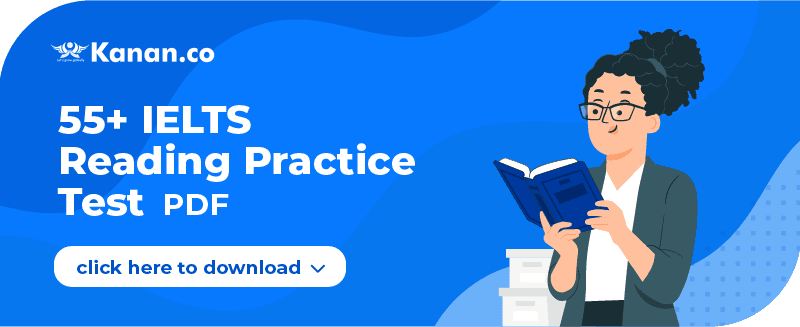
Answer Table
| 13. True | 16. False | 19. True | 22. A | 25. A |
| 14. True | 17. Not given | 20. B | 23. C | 26. B |
| 15. False | 18. False | 21. A | 24. C |
Mutualism IELTS Reading Practice Test- Exam Review
Here we have given Mutualism IELTS reading answers, as a sample article for the IELTS reading practice test. This article will help you to crack your exam with band scores. Scrutinize the given passage to answer the questions.
Passage
We have given Mutualism reading answers with location. Be careful while reading the passage and answer the questions
Mutualism reading answers
- Mutualism is an association between individuals belonging to two different species that benefit each other. There are numerous examples of this: the way flowers rely on insects to pollinate them or even how we humans rely on bacteria within our digestive system to break down our food.
- One of the most visible forms of mutualism can be found in the pampas grasslands of Argentina, where organisms belonging to two different species work together not only to benefit each other but also to change the ecosystem around them. Grasscutter ants have been instrumental in shaping the landscape of the pampas grasslands – in fact, the landscape has been created almost entirely by the ants. Although they are only 1.5 cm long, they are one of the few creatures capable of shaping their own environment and one of the few living creatures apart from humans that cultivate their own food. The ants harvest the grasslands to supply their colony with grass. Each year over 0.5 tonnes of grass are harvested by a single colony. However, grass consists largely of cellulose, which the ants cannot digest, so the ants have developed a mutualistic relationship with an organism that can digest it. Deep inside the ant nests is a fungus that is able to grow on the compost produced by the grass. The fungus is unique to the habitat inside the ants’ nest and it produces edible gardens for the ants. The relationship is so successful that a single colony can consist of up to eight million ants.
- One of the reasons for the ants’ success is the sophistication of their social organisation: they are all members of a single society but there is a division of labour within it. There are three main castes: the queen, the soldiers ( or majors) and the worker ants. The worker ants are further divided into categories: the minims (the smallest ants), the minors and the mediae, each with different duties. The soldier ants defend the colony against physical threats. They also clear the paths for the other workers. The mediae are the foraging ants that look for grass to cut up and take back to the nest. Once the grass has been harvested, the forager ants carry it to the nest by following a chemical trail. But often they are not alone: minims ride on them or on the grass in order to protect them from a particular species of fly that parasitises the foragers. As soon as the grass leaves arrive at the nest, the forager ants pass them to smaller gardener ants, which cut up the leaves into smaller and smaller pieces until they are small enough to feed to the fungus. They then pass the tiny pieces on to the smallest ants, which feed the grass to the fungus and tend the fungal gardens.
- A very important function of the smallest ants is to keep the fungus healthy. They do this by carefully inspecting each piece of grass leaf and making sure that it is free from other fungi or pests. In fact, the mutualistic relationship is supplemented by bacteria that live on the ants and give out chemicals that kill microbes harmful to the fungus. The relationship between the fungus and the ants is so developed that the grasscutter ants are sensitive to the fungus’s reaction to different plants; if a particular plant is poisonous to the fungus, the ants no longer collect it. Waste disposal is another serious concern. Waste is collected by waste-dispositor ants, which tend to be the older ants, thus ensuring that the younger ones can tend to other work. The waste-dispositor ants remove waste (including dead ants) from the nest and take it underground into the deepest tunnels, where they aid its decomposition by moving it around.
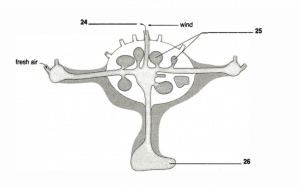
- Because the fungus at the heart of the colony nest is a living and breathing organism, it produces carbon dioxide – a very toxic gas. The ant nest is a masterpiece of construction, carefully made to keep air circulating in order to prevent suffocation through the build-up of carbon dioxide. The nest has two methods of air circulation. Firstly, the hot air produced by the fungal gardens at the centre of the nest flows up through a central tunnel and draws in cooler, cleaner air from the outside passages. The second method involves a series of towers at the top of the nest. When the wind blows over the towers, it draws out old air and fresh air rushes into the nest from nest holes that extend outwards from the main nest. A nest can measure up to 30 metres across, and other mounds extend away from the central nest for up to 80 metres. As the nest also dominates the underground world, often extending seven metres down, the rapid flow of air through the nest is essential to the health of the inhabitants and their garden.
Questions
Questions 13-19
- Do the following statements agree with the information given in Reading Passage 2?
- Write TRUE if the statement agrees with the information
- False if the statement contradicts the information
- Not given if there is no information on this
13. Grasscutter ants are one of a small group of creatures that use other organisms to produce food.
14. The fungus that grows in the nests of grasscutter ants is not found in any other kind of environment.
15. Grasscutter ants cut the grass into very small pieces so they can eat it.
16. Forager ants are the smallest ants.
17. Grasscutter ants can carry loads much heavier than their body weight.
18. The ants never collect plants that might harm the fungus.
19. The older ants are responsible for getting rid of waste.
Questions 20-23
- Classify the following as typical of
- Majors
- Mediae
- Minims
- Write the correct letter A, B or C next to questions 20-23
20. Take grass back to the colony
21. Protect the colony from invaders
22. Make sure the way to the food is clear
23. Farm the fungus
Questions 24-26
- Label the diagram below using words from the box
- Write the correct letter A-C in spaces 24-26
A. Fungal gardens
B. Waste tunnel
C. Carbon dioxide
Answers for Mutualism with Explanation
We have given a mutualism reading answers with explanation. It will help you to identify your mistakes in the answering process.
13. Answer: True
Explanation: “Deep inside the ant nests is a fungus that is able to grow on the compost produced by the grass. The fungus is unique to the habitat inside the ants’ nest and it produces edible gardens for the ants”. With this line it is clear that grasscutter ants are one of a small group of creatures that use other organisms to produce food. Hence the given answer is located in the last 4 lines of paragraph 2.
14. Answer: True
Explanation: “The fungus is unique to the habitat inside the ants’ nest and it produces edible gardens for the ants”. With this line it is clear that the fungus that grows in the nests of grasscutter ants is not found in any other kind of environment. Hence the given answer is located in the last 2 lines of paragraph 2.
15. Answer: False
Explanation: “As soon as the grass leaves arrive at the nest, the forager ants pass them to smaller gardener ants, which cut up the leaves into smaller and smaller pieces until they are small enough to feed to the fungus”. With this line it is clear that grasscutter ants do not cut the grass into very small pieces so they can eat it. Hence the given answer is located in the last 4 lines of paragraph 3.
16. Answer: False
Explanation: “The worker ants are further divided into categories: the minims (the smallest ants), the minors and the mediae, each with different duties”. With this line it is clear that the minims are the smallest ants. Hence the given answer is located in the 4-5 lines of paragraph 3.
17. Answer: Not given
18. Answer: False
Explanation: “The relationship between the fungus and the ants is so developed that the grasscutter ants are sensitive to the fungus’s reaction to different plants; if a particular plant is poisonous to the fungus, the ants no longer collect it”. With this line it is clear that the ants unknowingly collect plants that might harm the fungus. Hence the given answer is located in the 5-8 lines of paragraph 4.
19. Answer: True
Explanation: “Waste is collected by waste-dispositor ants, which tend to be the older ants, thus ensuring that the younger ones can tend to other work”. With this line it is clear that wasting collection and disposal is done by older ants. Hence the given answer is located in the 8-10 lines of paragraph 4.
20. Answer: B
Explanation: “The mediae are the foraging ants that look for grass to cut up and take back to the nest”. With this line it is clear that mediae takes grass back to the colony. Hence the given answer is located in the 7-8 lines of paragraph 3.
21. Answer: A
Explanation: “The soldier ants defend the colony against physical threats”. With this line it is clear that the major protects the colony from invaders. Hence the given answer is located in the 6th line of paragraph 3.
22. Answer: A
Explanation: “They also clear the paths for the other workers”. With this line it is clear that the Majors make sure the way to the food is clear. Hence the given answer is located in the 6-7 lines of paragraph 3.
23. Answer: C
Explanation: “They then pass the tiny pieces on to the smallest ants, which feed the grass to the fungus and tend the fungal gardens”. With this line it is clear that the smallest ant (minims) farms the fungus. Hence the given answer is located in the last 2 lines of paragraph 3.
24. Answer: C
Explanation: “The ant nest is a masterpiece of construction, carefully made to keep air circulating in order to prevent suffocation through the build-up of carbon dioxide. The nest has two methods of air circulation. Firstly, the hot air produced by the fungal gardens at the centre of the nest flows up through a central tunnel ”. With this line it is clear that this centre pipe lets hot, toxic carbon dioxide created by fungal. Hence the given answer is located in the 2-6 lines of paragraph 5.
25. Answer: A
Explanation: “Because the fungus at the heart of the colony nest is a living and breathing organism, it produces carbon dioxide – a very toxic gas”. With this line it is clear that the fungal garden is in the middle of the ant colony. Hence the given answer is located in the first 2 lines of paragraph 5.
26. Answer: B
Explanation: “The waste-disposer ants remove waste (including dead ants) from the nest and take it underground into the deepest tunnels, where they aid its decomposition by moving it around”. With this line it is clear that the deep underground tunnels are meant for waste disposal. Hence the given answer is located in the last 3 lines of paragraph 4.
Other reading answers

About Author Tejaswini Kota
Tejaswini is an enthusiastic writer, reader and a passionate learner. Additionally, she was a research fellow and holds a grip in English writings and research/paper publications. She holds bachelors and masters degrees in engineering. She spent three years in the education industry and is currently working as a full-time content writer at Kanan International, writing articles for study abroad projects. She is proficient in creating good quality content that helps the students for language proficiency tests like IELTS, GRE, TOEFL etc. and can help in advising you the right choice of college for admission.
Kanan.co is a trusted study abroad consultancy offering comprehensive services, resources, and solutions for students and education institutions. We support students at every stage of their global education journey, ensuring a smooth and guided experience. Along with test preparation for IELTS, GRE, TOEFL, and SAT, we provide expert services such as SOP writing, visa guidance, accommodation support, scholarship assistance, and education loan support. Our expertise and commitment to excellence make us a reliable partner for students pursuing international education.
Free Online Mock Test 2026
Practice our mock test worth Rs. 25000 for Free and know your IELTS score!








Global Headquarters
Kanan Int EdTech Inc
320 Bay Street, Suite 321 (Spaces), Toronto ON, Canada M5B 1N9
Indian Headquarters
Kanan International Pvt. Ltd.
D-wing, 2nd Floor, Trident Complex, Ellora Park Vadiwadi Road, Vadodara, Gujarat 390007
IT/ Digital Campus
Kanan International Pvt. Ltd
Old, New No 3, 2nd Floor, 1A, Dr Sadasivam Rd, T. Nagar, Chennai, Tamil Nadu 600017
Our branches
- Bardoli
- Bharuch
- Chennai
- Dehradun
- Gurugram
- Himatnagar
- Karnal
- Nadiad
- Navsari
- Palanpur
- Rajkot
- Vadodara
- Valsad
- Vallabh Vidyanagar
- Vapi
Study Abroad
Test Prep
Top Universities
Consultants
IELTS Centers
GRE Centers
TOEFL Centers
SAT Centers
Language Courses in Vadodara
Study Abroad Calculators
Featured Blogs
Study Abroad Consultants in Chennai
Study Abroad Consultants in Surat
Study Abroad Consultants in Navsari
Study Abroad Consultants in Bardoli
Study Abroad Consultants in Ahmedabad
Study Abroad Consultants in Anand
Study Abroad Consultants in Khanna
Study Abroad Consultants in Nadiad
Study Abroad Consultants in Vadodara
Study abroad consultants in Valsad
Copyright © 2026 KANAN.CO All rights reserved.