Describe a useful plant you know IELTS cue card


Author
24-06-2025

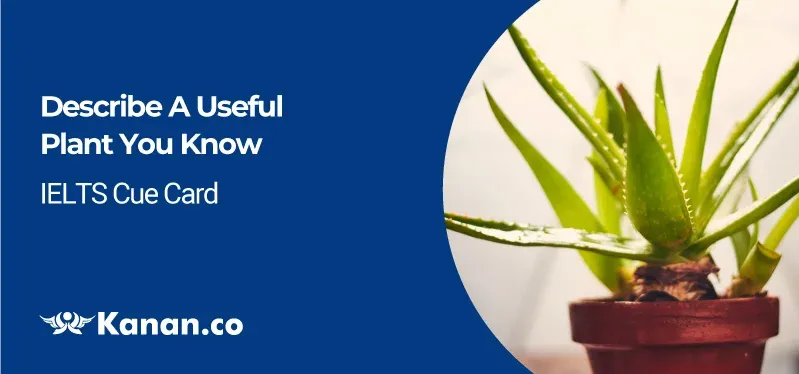
The cue card "Describe a useful plant you know" is given here. The three sections of the IELTS speaking test are the introduction, the cue card round, and the follow-up discussion round. You will have 11 to 15 minutes to present your ideas and communication abilities to the examiner. We've included three model answers for this IELTS speaking cue card, along with follow-up questions, to help you improve your skills and help you come up with ideas.

Describe a useful plant you know -IELTS Speaking Part 2 : Cue Card
Check Out our YouTube Channel to Practice Full-Length IELTS Listening Tests Daily

You must prepare a cue card that will be provided by your examiner for IELTS Speaking Task 2. You can find your topic in that cue card—"Describe a useful plant you know"—Along with some sub-questions to discuss the cue card for a minute or two, you'll be given a minute to construct your cue card. The IELTS speaking section 3 will include a follow-up session that will be a debate about the topic on your cue card.
Describe a useful plant you know
You should say
- What it is
- Where it is available
- What it looks like
- And explain how this plant is useful
Describe a useful plant you know - Model answer and Follow up questions
The model cue card answer for the “Describe a useful plant you know” topic is given and the corresponding IELTS speaking cue card part 3 follow-up questions are also given for reference.
Describe a useful plant you know Model answer 1
Introduction
Allow me to introduce you to the Neem tree, a highly valued plant with multiple benefits that has been venerated in traditional medicine and agriculture.
What it is
The Neem tree, scientifically known as Azadirachta indica, is an evergreen tree indigenous to India. It is well-known for its durability and adaptability.
Where it is available
Neem trees are abundant in India and can also be found in other tropical and subtropical regions. Its leaves, seeds, and oil can be found in most herbal stores and are utilized in a variety of goods.
What it looks like
Neem trees can reach a height of 15-20 meters and have a dense, spreading crown with dark green pinnate leaves. The tree bears small, fragrant white blooms and olive-like fruits containing seeds. Neem leaves have a bitter flavor.
And explain how this plant is useful
The Neem tree is extremely beneficial in a variety of ways. Its therapeutic benefits are well known for its leaves, seeds, and oil. Because neem oil is a natural insecticide and insect repellent, it is an indispensable tool in organic farming. Neem is used in traditional medicine to treat a variety of health ailments, including skin illnesses, digestive problems, and infections. Because of its antibacterial and antifungal characteristics, neem-based goods such as toothpaste and soaps are popular. Furthermore, neem has shown promise in cancer treatment and as an immune system booster. Because of its extraordinary adaptability, it is a vital resource in agriculture, medicine, and cosmetics.
Conclusion
To summarize, the Neem tree is a very beneficial plant with a long history of use in agricultural and traditional medicine. Its accessibility and usefulness in meeting a variety of health and agricultural needs have made it an essential component of many cultures and industries.
Describe a useful plant you know Model answer 2
Introduction
- I'd like to introduce you to the Aloe vera plant, a unique and versatile plant that has been prized for generations for its multiple benefits.
What it is
- Aloe vera (Aloe barbadensis miller) is a succulent plant well-known for its medical benefits.
- It is a member of the Asphodelaceae family and is distinguished by its thick, green leaves.
Where it is available
- Aloe vera is native to arid regions of North Africa, but it is now grown all over the world due to its appeal.
- It is available in a variety of forms, including potted plants for home use and as an ingredient in a variety of beauty and health products.
What it looks like
- Aloe vera is a low-growing shrub with serrated leaves that are thick and lance-shaped.
- The leaves are rich in vitamins, minerals, and antioxidants and contain a transparent, gel-like material.
- The plant may grow up to two feet tall and has spiky leaves that give it a distinguishing appearance.
And explain how this plant is useful
- Aloe vera is extremely beneficial and well-known for its numerous applications.
- The calming and therapeutic effects of the gel derived from its leaves are well known.
- It's frequently used to treat skin problems like sunburn, wounds, and burns.
- Furthermore, because of its moisturizing and anti-inflammatory properties, aloe vera gel is used in numerous skincare products such as moisturizers and creams.
- When consumed, it is also employed in the pharmaceutical sector for a variety of therapeutic applications, including the treatment of digestive disorders.
- Furthermore, aloe vera offers potential hair care advantages and can be found in shampoos and conditioners.
- Because of its flexibility and wide range of applications, it is a valuable and necessary plant.
Conclusion
- Finally, Aloe vera is an extremely beneficial plant due to its healing, calming, and health-improving characteristics.
- Its versatility and ability to treat a wide range of skin and health ailments make it a vital plant in many households and workplaces.
Describe a useful plant you know Model answer 3
Introduction
I'd like to introduce you to the Bamboo plant, a wonderful and adaptable plant that has been utilized for a wide variety of purposes throughout human history.
What it is
Bamboo is a grass that belongs to the Poaceae family. It is distinguished by its woody stems, known as culms, which vary in size and shape depending on the species.
Where it is available
Bamboo is found all over Asia, Africa, and the Americas. It grows in a wide range of conditions, from tropical to temperate. Bamboo is grown and harvested in numerous nations for a variety of reasons due to its utility.
What it looks like
Bamboo plants differ in size from small, fragile species to towering giants that can reach heights of over 100 feet. They are distinguished by hollow and segmented jointed stems, or culms. The leaves are typically tall and slender, with edible shoots in some species.
And explain how this plant is useful
Bamboo is an extremely valuable plant with a wide range of applications. Its strong culms are employed in construction, making it an ideal choice for buildings, bridges, and scaffolding. Bamboo is also utilized in the manufacture of furniture, flooring, and a variety of household items. Aside from structural applications, bamboo is frequently utilized in the production of paper, textiles, and musical instruments. It is a more sustainable alternative to hardwoods since it grows quickly and can be picked without causing harm to the plant. Bamboo is also an important material for traditional handicrafts and artwork. Because to its adaptability, renewability, and strength, it has acquired the moniker "the plant of a thousand uses."
Conclusion
Finally, bamboo is a valuable and very versatile plant with numerous applications in architecture, manufacturing, and art. Its eco-friendliness and sustainability make it a valuable resource for a variety of industries, as well as a symbol of resilience and adaptability in the plant kingdom.
Describe a useful plant you know Model answer 4
Introduction
I'd like to introduce you to Lavandula angustifolia, sometimes known as Lavender, a versatile and helpful plant that has grabbed the hearts and senses of many people all around the world.
What it is
The Lamiaceae family includes the fragrant herbaceous plant lavender. It is native to the Mediterranean region but is grown all over the world. Lavender is well-known for its distinct perfume and lovely purple or blue-violet blossoms.
Where it is available
Lavender can be found in gardens, farms, and even in the wild in climate-appropriate areas. It is, however, readily available in markets and stores, both in its natural state as a plant and in many processed forms.
What it looks like
Lavender is a shrub with narrow, lance-shaped leaves and tall spikes of tiny, tubular flowers. Lavender plants are not only helpful but also aesthetically beautiful in gardens and landscapes since their blossoms are fragrant and have a striking purple or blue tint.
And explain how this plant is useful
Lavender is an extremely beneficial plant with numerous applications. Aromatherapy and essential oil production are two of its most well-known applications. Lavender essential oil is well-known for its relaxing and stress-relieving effects. It is used to enhance relaxation and increase sleep quality in diffusers, massages, and skincare products.
Lavender has therapeutic properties in addition to its fragrant and culinary purposes. It has anti-inflammatory and antibacterial characteristics that make it useful for treating minor cuts, burns, and bug bites. Lavender tea is commonly used to treat headaches and anxiety.
Conclusion
Finally, Lavandula angustifolia, or Lavender, is a really beneficial plant with numerous applications in aromatherapy, culinary arts, medicine, and environmental protection. Its calming perfume, unusual look, and numerous applications have made it a cherished and indispensable plant for many people all over the world.
IELTS speaking part 3 - Describe a useful plant you know follow up questions
Follow-up questions for “Describe a useful plant you know” are given below. In the actual exam, The IELTS speaking part 3 - follow up question session is conducted for about 4-5 minutes where you have to discuss questions about a general topic or question on your cue card.
1. Do people in your country like to grow plants at home?
Yes, people in my country have a strong interest in cultivating plants at home. Gardening is a popular hobby and a treasured cultural practice for many people. People frequently cultivate a wide range of plants in their gardens, balconies, or inside areas, including flowers, herbs, vegetables, and even tiny trees. This activity not only beautifies dwellings, but it also creates a sense of well-being and connection with nature. Furthermore, it promotes sustainable living and raises environmental consciousness. Overall, my country's passion of home gardening demonstrates a great regard for the natural environment.
2. Do old people grow plants?
Yes, many elderly people in my nation enjoy gardening. Gardening is a passion that transcends age, and it frequently has special meaning for seniors. It gives people a sense of purpose and involvement, encourages physical exercise, and connects them to the past through traditional gardening traditions. Plant care can be a source of pleasure and enjoyment for older generations, allowing them to appreciate the beauty of nature in their own homes. Furthermore, passing on gardening skills and experiences from generation to generation develops a sense of community and family bonding. Yes, many elderly people in my nation continue to care for plants and gardens as a significant and rewarding part of their life.
3. How do schools teach students to grow plants?
Students are taught to grow plants in schools using a combination of practical hands-on activities and classroom learning. They frequently offer dedicated garden grounds or greenhouses where children can actively participate in plant planting, care, and observation. Teachers walk students through the entire process, from seed selection to soil composition, watering regimens, and the role of sunlight. Additionally, through classroom lessons, textbooks, and educational materials, kids can learn about plant biology, ecology, and environmental sustainability. This comprehensive approach not only teaches gardening skills but also instills a larger appreciation of the natural world and the value of conservation. It instills in kids a feeling of environmental responsibility as well as a lifetime enthusiasm for plants and gardening.
4. What is the main plant of your country?
My country's most famous plant is probably the "Lotus." The Lotus is not only the national flower of India, but it also has profound cultural and spiritual importance. In numerous religious and cultural traditions, it represents purity, enlightenment, and rebirth. Its extraordinary beauty and tenacity make it an appropriate symbol for my country. The Lotus is a source of pride and veneration, signifying our culture's timeless values and spirituality.
IELTS cue card topics
Check out the other IELTS cue card topics to practice
- Describe an achievement that you are proud of
- Describe a place of historical importance
- Describe a conversation topic you were not interested
- Describe a country you would like to visit
- Describe someone you know who is a good teacher
Conclusion
Review sample responses for the cue card "Describe a useful plant you know" as it will help you when creating your own responses. You can try coming up with your own solutions using these answers as a starting point. Additionally, you can get a sense of the follow-up inquiries.

About Author Manimegalai Samidurai
Manimegalai is a multifaceted professional, excelling as an author, writer, and study-abroad expert. Her vast knowledge of English proficiency exams, including IELTS, GRE, SAT, and PTE, and exceptional content writing skills make her a go-to resource for students seeking guidance and support in their foreign education journey. She is a trusted authority in writing content related to these test-prep exams, making her an invaluable resource for those seeking guidance. With her well-researched and informative blogs, articles, and study materials, Manimegalai has helped countless students achieve their desired band scores and get admissions to top-notch colleges & universities in countries like Canada, USA, UK, Australia, Ireland, etc.
Kanan.co is a trusted study abroad consultancy offering comprehensive services, resources, and solutions for students and education institutions. We support students at every stage of their global education journey, ensuring a smooth and guided experience. Along with test preparation for IELTS, GRE, TOEFL, and SAT, we provide expert services such as SOP writing, visa guidance, accommodation support, scholarship assistance, and education loan support. Our expertise and commitment to excellence make us a reliable partner for students pursuing international education.
Free Online Mock Test 2026
Practice our mock test worth Rs. 25000 for Free and know your IELTS score!








Global Headquarters
Kanan Int EdTech Inc
320 Bay Street, Suite 321 (Spaces), Toronto ON, Canada M5B 1N9
Indian Headquarters
Kanan International Pvt. Ltd.
D-wing, 2nd Floor, Trident Complex, Ellora Park Vadiwadi Road, Vadodara, Gujarat 390007
IT/ Digital Campus
Kanan International Pvt. Ltd
Old, New No 3, 2nd Floor, 1A, Dr Sadasivam Rd, T. Nagar, Chennai, Tamil Nadu 600017
Our branches
- Bardoli
- Bharuch
- Chennai
- Dehradun
- Gurugram
- Himatnagar
- Karnal
- Nadiad
- Navsari
- Palanpur
- Rajkot
- Vadodara
- Valsad
- Vallabh Vidyanagar
- Vapi
Study Abroad
Test Prep
Top Universities
Consultants
IELTS Centers
GRE Centers
TOEFL Centers
SAT Centers
Language Courses in Vadodara
Study Abroad Calculators
Featured Blogs
Study Abroad Consultants in Chennai
Study Abroad Consultants in Surat
Study Abroad Consultants in Navsari
Study Abroad Consultants in Bardoli
Study Abroad Consultants in Ahmedabad
Study Abroad Consultants in Anand
Study Abroad Consultants in Khanna
Study Abroad Consultants in Nadiad
Study Abroad Consultants in Vadodara
Study abroad consultants in Valsad
Copyright © 2026 KANAN.CO All rights reserved.