- Study Abroad
- / ielts
- / coastal archaeology of britain reading answers
Coastal archaeology of Britain Reading Answers


Author
16-09-2025

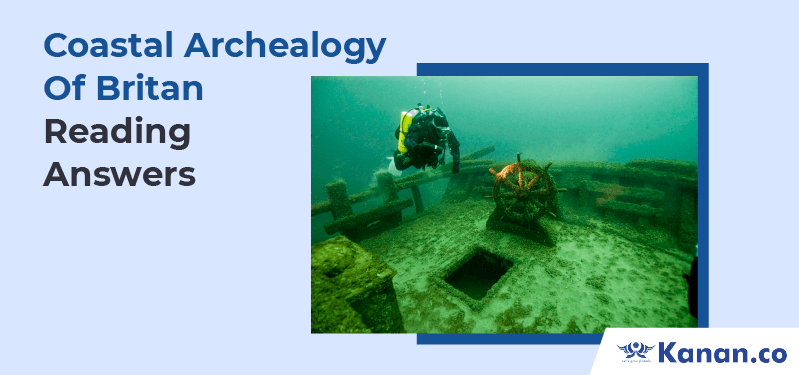
Find Coastal archaeology of Britain reading answers in the table given below. Check the answers only after you have completed the reading test.
Having a knowledge of synonyms will help you to write coastal archaeology of Britain reading answers.
Coastal archaeology of Britain reading answers must be completed in 20 minutes. Make sure that you have read the instructions before solving the question types to prevent errors in the IELTS reading test.
For all IELTS reading question types, you should develop different strategies for all of them. Before reading the passage of the coastal archaeology of Britain reading answers you must go through the question first, this will give you an idea about what keywords you should focus on.
- IELTS Reading Multiple Choice
- IELTS Reading True/False/Not Given
- IELTS Reading Matching Features
Check Out our YouTube Channel to Practice Full-Length IELTS Reading Tests Daily

Before attempting to write the Coastal archaeology of Britain Reading Answers, check the IELTS reading tips.
IELTS Reading passage - Coastal archaeology of Britain
Attempting our mock test and checking Coastal archaeology of Britain reading answers will help you to familiarise with the pattern of the exam and how long each section of the reading test could take.
Coastal archaeology of Britain
- Amongst the most significant recent advances has been the realization of the species richness of England's coastal archaeology. These vast resources some aspects have long been recognized. Ever since at least the 18th century, the so-called "underwater forests" off the shores of England have piqued the curiosity of classicists; however, it hasn't been until the early 1980s that the historical possibilities of the coast have received significant and methodical research.
- As community awareness has grown, ongoing studies into global warming and its effects on the environment splashed around into a much larger public discussion. The possibility of sea-level rise within the next couple of centuries, and one‘s influence on the performance of coastal areas, have been a specific emphasis for worry. It is possible to identify a multifactorial etiology for this density of exertion and involvement. At about the same time, historians started to realize that anthropogenic and coastal marine erosion-related devastation was having a more detrimental effect on the coastline region's historical assets.
- As the glaciers retreated and the continent was rebalanced, the primary mechanism altering England's physical manifestation throughout the post-glacial period was the elevation of the sea level about the land. The sea's incursion, the disappearance of vast tracts of land that are now buried beneath the North Sea and the English Channel, and particularly the destruction of the land connection between France and England, which also ultimately reduced Britain to an island, must have had a major impact on the lives of our ancient ancestors. However, accounts of the time rarely focus on how prehistoric communities adapted to these environmental shifts. Even though the rise in comparative water level has been very well recorded, we understand next to nothing about the ongoing reshaping of the shoreline, which has been one driver in this. Numerous, mostly silent processes that have not yet received enough research were responsible for this. Future studies will focus heavily on the intricate reconstruction of shoreline histories and the shifting settings that can be used by humans.
- For how much the water level has soared and the shoreline has receded as a result, a lot of the archaeological material that is presently being uncovered in the coastal region is related to what was originally a farmland occupation, whether this is being deteriorated or disclosed as an underwater land surface. Since its exact location in the coastal region is the product of subsequent, unconnected events, it cannot teach us much regarding previous responses to the water. Its significance will need to be evaluated in light of other relevant discoveries made in dry soil sites. One illustration of how preservation is often great due to physical context is the Prehistoric building found only at Stumble in Essex.
- There is evidence that human manipulation of what would be a coastline setting in some of these submerged land surfaces, and there is analogous evidence all along the modern coast. The evidence is varied and still poorly understood when it does pertain to past human unsustainable exploitation and opportunities provided either by sea or the coastline. We are still not in a situation to provide even rough estimates of the responses to such important questions as the degree whereby the ocean and the shoreline impacted living things live in the past, the proportion of the population that has ever lived near the ocean, or rather or not coastal communities differed from that inland.
- Boats are the most obvious proof that people have used the sea, yet there is still much we don't know about how they are made and used. Unsurprisingly, the majority of the wrecks that are known to exist near our shore date from the post-medieval period. These sites present an unmatched opportunity for research that has thus far mostly gone unused. There is a break in the records of a century that cannot yet be understood when boats resurface, but they are constructed using a radically different technology than the ancient stitched boats, which all appear to date to the 2nd century BC.
- Ships were among the most complex artifacts produced by pre-modern communities, as well as the further study of their manufacturing and use makes an enhanced understanding of historical perceptions toward technological change. Despite the same fact that we know very little about boatbuilding, it must've been a very significant activity along much of our shoreline.
- The volume of industrial production along the coast has become one of the greatest significant discoveries of contemporary research. Among the better-recorded occupations are fishing and salt manufacture, but even here, our knowledge is fragmentary. The degree of prior expenditure in infrastructure for obtaining fish and shellfish was one of the surprises of a recent assessment. Many techniques of fishing will leave little archaeological evidence. In places like Essex and the Bristol estuary, complex wood fish sluice gates have been discovered. These weirs are frequently quite large and sensitive to aerial imagery in the intertidal zone. The manufacture of salt, particularly during the later Iron Age and back To roman periods, has long been acknowledged, particularly in the Thames Estuary, the Solent, and Poole Harbor, but the causes of that industry's downfall and the characteristics of subsequent coast salt works are considerably less clear. Mineral reserves like sand, gravel, stone, coal, ironstone, and alum were all mined. Other businesses were also situated along the coast, because either the natural resources outcropped here or for ease of working and shipping. Although these sectors are not well understood, they occasionally have large, noticeable mainstays.
- The recent study can thus be used to develop an understanding of the variety and significance of the archaeological evidence maintained in the coastal area. However, in early form, it is also becoming clearer how difficult it will be to manage that resource. The issue is brought on not only by the volume and diversity of the archaeological evidence, but by two other factors: the resource is subject to a wide range of natural and human hazards, and there is a complicated network of organizations with interests or power over the coastal region. Renovation of historical sites and old waterfront regions, as well as the growing role of the coastline for the travel and leisure industries, are examples of human hazards that put pressure on governments to build more facilities like marinas. The damage that ferries' growing size has done to intertidal deposits' delicate deposits has also increased. With the expected sea-level rise over the next centuries, parts of the south and east of England pose the biggest natural hazard. Though this is expected to be rather localized, its effect on archaeologists will be far higher than that of the majority of archaeological sites. Therefore, defending one location might just move the threat to another location along the coast. Archaeologists will face a significant difficulty as a result of the preservation of the historical artifacts having to be taken into account over a considerably broader geographic and time frame than is typical for dry ground locations.
Coastal archaeology of Britain IELTS Reading Questions
Question 1-3
Choose the correct answer from A, B, C , and D
(Guide: 4 options are given, and students must choose one most appropriate answer based on information available in the passage.)
TIP: students must keep the Keywords in mind before choosing the answer.
1. What, in particular, has recently piqued popular interest in coastal archaeology?
- The shoreline archaeology of England has developed quickly.
- increasing knowledge of climate change
- An undersea forest has been found.
- systematic analysis of coastal archaeological discoveries
2. What does the passage have to say about the boat-related evidence?
- The technique used by prehistoric people to create boats is sufficiently known.
- Many of the recovered boats were discovered in harbors.
- The last time boats were used was 1,000 years ago.
- Fishing was the initial use of boats.
3. What can be learned through flying?
- a salt mine
- Roman cities
- Harbors
- Fisheries
Click to know more about IELTS reading multiple choice question
Question 4 – 10
In the questions, 4-10 students must write
TRUE- If the statements agree with the information in the passage
FALSE- If the statements disagree with the information in the passage
NOT GIVEN- IF there is no information in the passage
(Guide: Students are given three choices TRUE/FALSE/NOT GIVEN, and they must choose an option based on the information provided in the passage.)
TIP: Read the paragraph carefully to find the given information
4. As a result of the sea level rising after the glacial period, England lost a lot of its territory.
5. England's shoreline has undergone periodic modification.
6. Seawater may provide good protection for coastal archaeological material.
7. Pre-modern humans utilized very basic boats with very rudimentary designs.
8. Many other European nations also had similar boats that were found.
9. There are not many papers on mineral utilization.
10. The coastline is becoming increasingly damaged by large passenger vessels.
Read IELTS Reading True False Not given questions to get exercises and tips
Question 11 to 13
Choose three statements from A to G, which are mentioned in the paragraph
(Guide- in this question, students must choose three statements that are mentioned in the paragraph, from the given six statements {A-G}.)
TIP- Focus on the keyword to find your answer
- How coastal archaeology came to be known
- It is challenging to comprehend how many people lived near the ocean.
- How well did ancient societies understand the effects of climate change
- We don't know a lot about boat evidence.
- Ports have been built on several former fishing grounds.
- The archaeological remnants are in danger of human development.
- Future developments will increase the significance of coastal archaeology.
Read IELTS reading matching features to get exercises and tips
Coastal archaeology of Britain Reading Answers with explanation
Check the coastal archaeology of Britain reading answers with explanation to get feedback about how you have answered the questions.
1. Answer: B. The rising awareness of climate change
Keywords: climate change, rising sea level, coastal environments
Keyword Location: paragraph B
Explanation: As scientists started to research climate change and awareness among the
2. Answer: C. The use of boats had not been recorded for a thousand years
Keywords: Boats, millennium, reappeared
Keyword Location: Paragraph F, Line 6
Explanation: There was a gap of about a millennium before boats reappeared after the prehistoric sewn plank boats, which were seen in the second millennium. This gap of thousand years is yet to be explained.
3. Answer: D. Fisheries
Keywords: aerial photography, Essex, Severn estuary
Keyword Location: Paragraph H, Line 6
Explanation: In areas such as Essex and Severn estuary, aerial photography has been used in shallow water areas to help catch fish. Thus, proving that fish can be discovered from air.
4. Answer: True
Keywords: England, rise in sea level, loss of land
Keyword Location: Paragraph C
Explanation: As glaciers start melting, there was a significant impact on the physical forms in England. A rise in sea level after the post-glacial period led to the readjustment of landmass. A large amount of land was lost under the North Sea and the English Channel. Britain became an island, and the land bridge between England and France was also lost.
5. Answer: False
Keywords: constant, tiny, coastline
Keyword Location: Paragraph C, Line 12
Explanation: paragraph C mentions that little information is available about the constant changes along the coastline of England. The changes are constant and not periodic, making the given statement False.
6. Answer: True
Keywords: archaeological evidence, rise in sea level, coastal zones
Keyword Location: Paragraph D
Explanation: the rise of the sea level has allowed for regression of the coast leading to archaeological evidence being protected and exposed in the coastal zones.
7. Answer: False
Keywords: most complex, premodern society
Keyword Location: Paragraph F, Line 10
Explanation: section F of the paragraph mentions that boats were one of the most complex structures in pre-modern societies.
8. Answer: Not Given
9. Answer: True
Keywords: mineral resources, poorly documented
Keyword Location: Paragraph H, Line 15
Explanation: The exploitation of mineral resources such as stone, coal, and alum is extensive, and even though these industries are poorly documented, various documents are available.
10. Answer: True
Keywords: large size ferries, damage
Keyword Location: Paragraph I, Line 11
Explanation: Paragraph I points out that large size ferries have led to damage to the deposits in the intertidal zone of the sea.
11. Answer: B. It is difficult to understand how many people lived close to the sea.
Keywords: percentage of the population, lived, coastal areas
Keyword Location: Paragraph E, Line 5
Explanation: scientists can still not understand fundamental questions about the coastal areas, such as the percentage of the population that lives in coastal areas.
12. Answer: D. Our knowledge of boat evidence is limited.
Keywords: still lot to learn, production, use
Keyword Location: Paragraph F
Explanation: there is still a lot that we need to learn about the use and production of boats. This statement shows that our knowledge about boats is limited.
13. Answer: F. Human development threatens the archaeological remains.
Keywords: threat, human redevelopment, archaeological remains
Keyword Location: paragraph I, line 3
Explanation: One of the biggest threats to archaeological remains is humans. Human threats to these sites are redevelopment, tourism, and increasing requirements for marinas.
Check answers for other passages
Click to check the other important Reading answers passages listed below,
- The History of Salt Reading Answers
- The Benefits of Being Bilingual Reading Answers
- When Evolution Runs Backwards Reading Answers
Conclusion
The reading passage and “Coastal archaeology of Britain Answers'' will help you to complete the reading test within the time limit. Practice the mock reading tests as much as possible to improve your answering and time management skills. You can get the resources from our website.

About Author Arivarasi
Arivarasi is an experienced author with expertise in the study abroad industry and preparing test materials for exams like IELTS, TOEFL, GRE, SAT, PTE, etc. She stays up-to-date with university and college requirements for international students which allows her to provide guidance on course selection, documents like SOP, LOR, and scholarship opportunities. She has written numerous articles on study abroad exams, destinations, universities & colleges requirements, admission procedures, and the entire process of studying abroad. Collaborating with industry experts and counselors, she crafts informative articles that make students take the right decisions.
Kanan.co is a trusted study abroad consultancy offering comprehensive services, resources, and solutions for students and education institutions. We support students at every stage of their global education journey, ensuring a smooth and guided experience. Along with test preparation for IELTS, GRE, TOEFL, and SAT, we provide expert services such as SOP writing, visa guidance, accommodation support, scholarship assistance, and education loan support. Our expertise and commitment to excellence make us a reliable partner for students pursuing international education.
Free Online Mock Test 2026
Practice our mock test worth Rs. 25000 for Free and know your IELTS score!








Global Headquarters
Kanan Int EdTech Inc
320 Bay Street, Suite 321 (Spaces), Toronto ON, Canada M5B 1N9
Indian Headquarters
Kanan International Pvt. Ltd.
D-wing, 2nd Floor, Trident Complex, Ellora Park Vadiwadi Road, Vadodara, Gujarat 390007
IT/ Digital Campus
Kanan International Pvt. Ltd
Old, New No 3, 2nd Floor, 1A, Dr Sadasivam Rd, T. Nagar, Chennai, Tamil Nadu 600017
Our branches
- Bardoli
- Bharuch
- Chennai
- Dehradun
- Gurugram
- Himatnagar
- Karnal
- Nadiad
- Navsari
- Palanpur
- Rajkot
- Vadodara
- Valsad
- Vallabh Vidyanagar
- Vapi
Study Abroad
Test Prep
Top Universities
Consultants
IELTS Centers
GRE Centers
TOEFL Centers
SAT Centers
Language Courses in Vadodara
SOP Blogs
Featured Blogs
Study Abroad Consultants in Chennai
Study Abroad Consultants in Surat
Study Abroad Consultants in Navsari
Study Abroad Consultants in Bardoli
Study Abroad Consultants in Ahmedabad
Study Abroad Consultants in Anand
Study Abroad Consultants in Khanna
Study Abroad Consultants in Nadiad
Study Abroad Consultants in Vadodara
Study abroad consultants in Valsad
Copyright © 2026 KANAN.CO All rights reserved.